



BankTrack news
BankTrack blog
Partner news
Partner blog

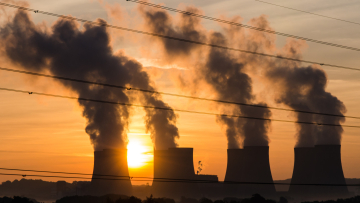
TotalEnergies is an oil and gas supermajor: Its 2020 income ranked seventh among the world’s oil and gas companies. It is one of the 20 fossil fuel companies responsible for more than one-third of the modern era’s total carbon emissions. Associated with countless controversies and involved in many Dodgy Deals, TotalEnergies is actively contributing to climate breakdown.
Banks and other financial institutions must demand that their fossil fuel major clients immediately halt all activities that expand fossil fuel infrastructure, and develop and implement credible phase-out plans for their existing fossil-fuel-based activities, on a timescale aligned with Paris Agreement goals. In the absence of such commitments, banks must stop servicing these clients.
| Take Action! |
| Tell Total's funders: #TotalKnew: cut them off |
| Sectors | Oil and Gas Extraction , Gas Electric Power Generation, Pipeline Transportation of Crude Oil, Pipeline Transportation of Natural Gas |
| Headquarters |
|
| Ownership |
listed on Euronext Brussels, Euronext Paris, London Stock Exchange & NYSE
TotalEnergies's shareholding structure can be accessed here. |
| Subsidiaries |
|
| Website | http://www.totalenergies.com |
TotalEnergies is a French multinational integrated oil and gas company. Founded in 1924, it is one of the largest oil and gas companies in the world. Its businesses cover the entire oil and gas chain, from the exploration and production of crude oil and natural gas, to power generation, transportation, refining, petroleum product marketing and the trading of international crude oil and products. In May 2021, the company changed its name from 'Total' to 'TotalEnergies' with the intention of illustrating its investments in the production of green electricity. Dating March 31 2025 TotalEnergies' assets amounted to USD 291.05 billion.
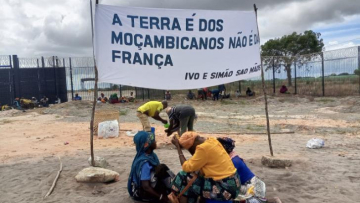
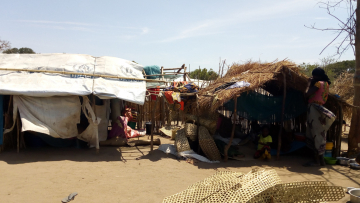
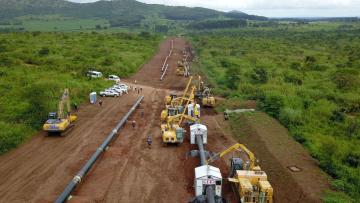
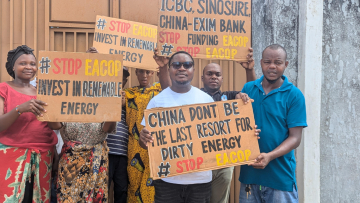
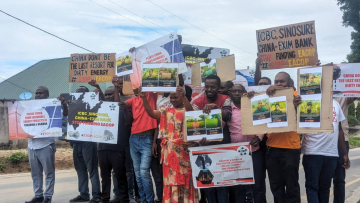
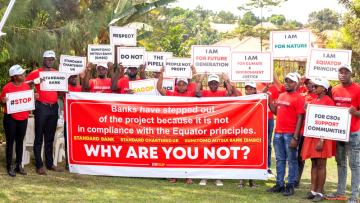
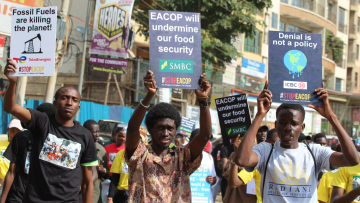
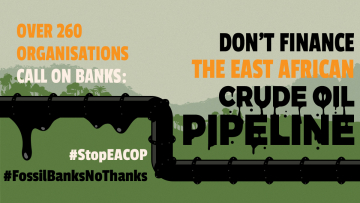
Mass forced resettlements in the name of TotalEnergies' interests include the East African Crude Oil Pipeline, of which TotalEnergies owns 62% (alongside Uganda's and Tanzania's national oil companies at 15% each, and China's CNOOC at 8%). Currently reported to be over 80% complete and planned to begin exporting oil later in 2026, construction of the 1,443 kilometre pipeline has required the resettlement of local communities and the reclamation of private land along its route, endangering livelihoods. TotalEnergies' related Tilenga oil drilling project, which sits partly within Lake Albert's basin and inside Murchison Falls National Park, a protected nature reserve in Uganda, has displaced thousands of households on top of this.
EACOP Lawsuits: Alleged human rights abuses linked to these projects led six NGOs to bring a lawsuit against TotalEnergies in October 2019, following a two-year NGO field investigation into the company's Lake Albert and Murchison Falls operations that documented land-grabbing and intimidation of affected communities. The case rested on France's Duty of Vigilance law, which compels large French companies to identify and prevent human rights and environmental risks across their operations. That case was dismissed on procedural grounds in February 2023, with the court ruling that the plaintiffs' evidence had departed too far from their original 2019 formal notice. A second suit, filed by a similar coalition in June 2023, remains before the Paris court: in September 2025, judges ordered TotalEnergies to disclose internal documents sought by the plaintiffs, with a hearing on the merits expected.
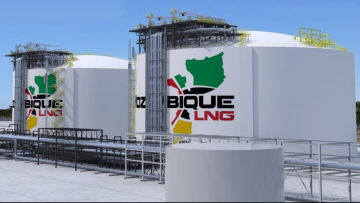
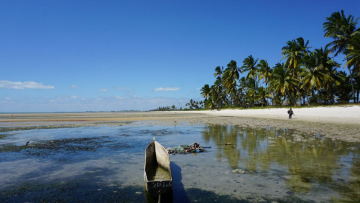
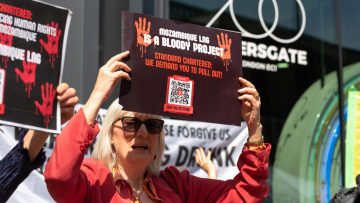
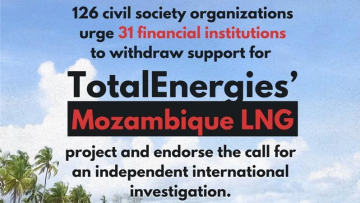
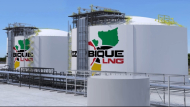
Militarisation has been one consequence of TotalEnergies’ joint Mozambique LNG Project. This gas enterprise has drawn the attention of militants, some of whom killed eight TotalEnergies subcontractors in July 2020. The attack contributed to a surge in the area’s militarisation. In 2025 the European Center for Constitutional and Human Rights filed a legal complaint of complicity in war crimes, accusing the company of directly financing and supporting Mozambique’s Joint Tasque Force, composed of Mozambican armed forces, which allegedly tortured/killed dozens of civilians on TotalEnerges’ gas site (the ‘container massacre’).
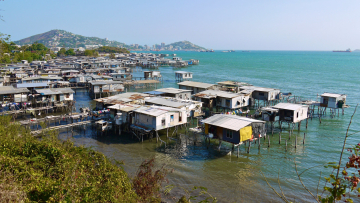
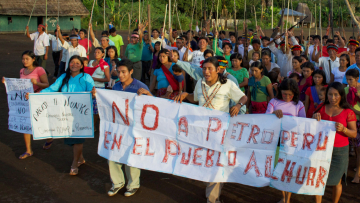
The violation of Indigenous rights has been a consequence of the Vaca Muerta Shale Basin project. Argentina’s Vaca Muerta Shale Basin is one of the largest shale oil and gas reserves in the world and TotalEnergies is helping to exploit it. As a result, public health, the safety of workers, air quality, the ancestral lands of Indigenous people and the likelihood of earthquakes are all being negatively affected. Further, the Papua LNG has failed to show that the required Free, Prior and Informed Consent has been secured, and PNG organisations have raised concerns about whether communities have received accurate information about the project’s environmental or climate impacts.
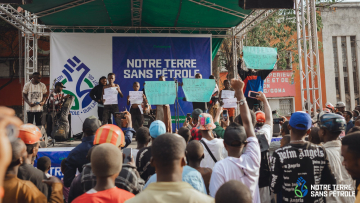
Threats to human rights defenders and initimidation of journalists have been reported in several TotalEnergies projects, including Mozambique LNG & East African Crude Oil Pipeline (EACOP).
TotalEnergies’ Wikipedia page has an overview of the company's numerous controversies.
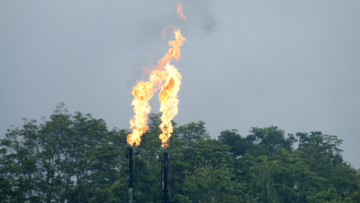
An historically significant contributor to climate change. TotalEnergies' operations were responsible for 34 million tonnes of greenhouse gas emissions (Scope 1 and 2) in 2024. Its Scope 3 emissions from the use of sold products (e.g. the CO2e released when customers burn the oil and gas it sells) totalled 342 million tonnes that year, roughly ten times its direct operational footprint. TotalEnergies' CO2e emissions between 1934 and 2024 amount to 18.57 billion tonnes, according to the Carbon Majors database. This makes TotalEnergies one of the world's largest contributors to the adverse impacts of climate change. Total's April 2026 deal with EPH will also worsen Europe's dependency on fossil gas.
Greenwashing is obscuring TotalEnergies’ lack of commitment to mitigating climate change. Total rebranded as TotalEnergies in 2021 to illustrate its investments in the production of green electricity, but its business plans are nowhere near being Paris-aligned. According to 2022’s Big Oil Reality Check report, TotalEnergies’ climate pledges and plans are ‘grossly insufficient’. The report noted that the company has no stated end-date for fossil fuel production, as well as multiple, conflicting sets of emissions reduction targets. In 2021, the International Energy Agency (IEA) stated “there is no need for investment in new fossil fuel supply in [their] net zero pathway” if the world is to reach net-zero by 2050; TotalEnergies continues to pour most of its investments into new fossil fuel projects, with the only stipulation being that they must emit lower-intensity greenhouse gases than TotalEnergies’ portfolio average.
Qatar's oil and gas fields TotalEnergies signed an agreement with QatarEnergy to increase the extraction of gas from Qatar's North Field, the biggest non-associated gas field in the world and one of the world's largest carbon bombs. TotalEnergies is a shareholder in North Field East and North Field South. If all the reserves of Qatar's oil and gas fields are burned this will lead to an additional 50 gigatonnes of CO2 emissions. These emissions will lead to USD 20 trillion in economic damage and 11 million people dying prematurely. These deaths will most likely take place in poor, marginalised and/or Indigenous communities who bear very little responsibility for causing the climate crisis.
Investing in pro-fossil fuel lobbying means that TotalEnergies is actively trying to rein in pro-climate momentum. The company is no longer a member of the American Fuel and Petrochemical Manufacturers' group, but in 2019 TotalEnergies spent about USD 30 million on lobbying to delay, control or block policies to tackle climate change. As of May 2022, TotalEnergies had not committed to stop lobbying or making adverts that obstruct climate change solutions.
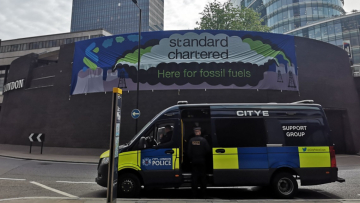
In January 2026 TotalEnergies issued USD 3.5 billion in three bonds. It was supported by Bank of America, BPCE/Natixis, Citigroup, Morgan Stanley, MUFG, SMBC and Standard Chartered.
In June 2025 TotalEnergies issued EUR 3 billion in bonds: EUR 900 million, maturing in July 2040; EUR 1.1 billion, maturing in July 2035; and EUR 1 billion, maturing in July 2031. The underwriters were Citi, BBVA, Deutsche Bank, JPMorgan Chase, MUFG, Royal Bank of Canada, Société Générale, and Wells Fargo.
In February 2025 TotalEnergies issued EUR 3.15 billion in bonds: EUR 1 billion, maturing in March 2033; EUR 1.3 billion, maturing in March 2045; EUR 850 million, maturing in March 2037. The underwriters were Citi, Santander, Mizuho, Société Générale, Standard Chartered and UniCredit.
In April 2026, TotalEnergies and Europe’s largest gas power developer, EPH, finalised a 50/50 joint venture, named TTEP. Beyond Fossil Fuels (BFF) analysed the consequences for Europe’s energy future. Under the pretense of bringing flexibility to Europe’s power system, the alliance between TotalEnergies and EPH effectively leads to the emergence of a new fossil gas giant, which will deepen Europe’s dependence on costly fossil gas. Because it relies on imports of two million tonnes of foreign LNG per annum, the joint venture will worsen Europe’s pricey gas import dependence and undermine Europe’s efforts to accelerate the transition to clean, secure and affordable energy. The fossil fuel industry of Russia, Qatar and the US (which is now Europe’s principal provider of
LNG, and rising) will be the first to benefit financially from this endeavour.
During its 2021 AGM, Total rebranded to TotalEnergies to signal its diversification into renewable energy sources and electricity.