New report exposes the high risk in TotalEnergies’ fossil fuel expansion
TotalEnergies, the EU’s largest oil and gas company, leads its direct competitors in fossil fuel expansion in autocratic states, “hybrid regimes,” and countries with high political and economic risks. This is one of the main findings of an exclusive Urgewald analysis based on the Global Oil & Gas Exit List (GOGEL 2025) industry database.
According to the analysis, more than half of the new oil and gas fields (4,178 out of a total of 7,829 million barrels of oil equivalent/mmboe) that TotalEnergies plans to develop in the short term are located in autocracies or “hybrid regimes.” A further analysis shows that over 3,700 mmboe of said reserves are located in “high risk” or “extreme risk” countries, where business risks such as corruption and political instability are particularly pronounced. (1)
The analysis is part of the report “Total Risk: TotalEnergies’ Global Oil and Gas Expansion” published today and available for download here: urgewald.org/en/total-risk-expansion.
Sonja Meister, energy campaigner at Urgewald and author of the report, comments: “TotalEnergies is taking a huge risk with its fossil fuel expansion and disregarding the repercussions for communities on the ground. This game of roulette has serious consequences for civil society, ecosystems, and the climate alike.”
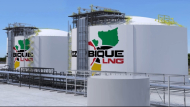
Another striking feature of TotalEnergies’ plans is the high degree of geographic concentration: Uganda and Mozambique alone account for 40 percent of the company’s short-term expansion. This is where the “Mozambique LNG” project—which is particularly controversial from a human rights perspective—is located, as well as the Ugandan “Tilenga” and “Kingfisher” oil fields, which supply oil for the East Africa Crude Oil Pipeline (EACOP) project. If we include the expansion projects in Iraq, the three countries account for more than 50 percent of the group’s total short-term upstream expansion.
In connection with “Mozambique LNG,” two criminal complaints were filed against TotalEnergies in France, where the group is headquartered. One alleges, among other things, negligent homicide (2), and the other—complicity in war crimes, torture, and abduction (3). TotalEnergies denies the allegations. (4) In December 2025, the export credit agencies of the United Kingdom and the Netherlands withdrew their participation in project loans totaling approximately $2.2 billion.
Meister says: “TotalEnergies continues to expand its fossil fuel presence in some of the most unstable and repressive countries in the world—while ignoring the consequences for local people. Far from a mere coincidence, the withdrawal of the export credit agencies and the criminal complaints in France are symptoms of a fundamentally flawed strategy.”
TotalEnergies’ dangerous business model relies heavily on banks and institutional investors. Bonds have become the company’s most important source of financing compared to loans. The ten largest investors in TotalEnergies include French investor Crédit Agricole (incl. Amundi) (rank 1) and Deutsche Bank (primarily DWS) (rank 5). German investor DZ Bank (primarily Union Investment) is on rank 12. None of these investors have committed to stop buying new bonds from TotalEnergies. Urgewald demands that financial institutions end their support for TotalEnergies and withdraw from financing fossil fuel expansion projects.
Banks and investors should critically reassess their business dealings with TotalEnergies in light of the energy transition as well. Although the company lowered its renewable energy capacity target this year from 100 to 80 gigawatts (GW) by 2030, it would still need to significantly accelerate its expansion to meet this goal. However, capital expenditures in the crucial “Integrated Power” sector are stagnating after being reduced by 20 and 25 percent, respectively, over the past two years. TotalEnergies has already abandoned its 1.5°C-aligned net zero target. According to its own projections, the group’s energy production will remain predominantly fossil-based—at least 85 percent—through 2030.
Meister says: “TotalEnergies relies on the financial industry’s continuous support. Without new bonds, it would be much harder for the group to finance its destructive expansion projects such as ‘Mozambique LNG’ or ‘EACOP’. The banks and investors involved must recognize their responsibility and not sink further funds into these risky endeavors.”
Furthermore, through a new joint venture with the Czech holding company EPH, TotalEnergies is set to acquire a stake in nearly 13 GW of gas-fired power plant capacity across five European countries. The move constitutes a near-doubling of the group’s currently installed gas-fired capacity of 7 GW.
Details on the EPH deal can be found in a report by Urgewald’s partner organization Beyond Fossil Fuels, also published today.
According to BFF’s findings, TotalEnergies and EPH’s joint venture will lead to the emergence of a new fossil gas giant, deepening Europe’s dependence on costly imported fossil gas, increasing energy bills and slowing down Europe’s clean energy transition. Based on 2025 generation figures, BFF estimates that in the coming five years the joint venture will produce climate emissions rivaling those Ireland or Denmark produce in a year. BFF’s report debunks the so-called “flexibility” narrative pushed by the two companies and highlights the climate, geopolitical, and financial risks associated with this merger.
Endnotes
(1) To calculate the impact of operations in countries with poor human rights standards, Urgewald compared TotalEnergies’ short-term expansion plans for new oil and gas production with the results of the Economist Intelligence Unit’s Democracy Index from 2025. For the calculation regarding business operations in countries with high political and economic risks, urgewald used Allianz Trade’s country risk rating as of March 2026.