French banks support EPH, contrary to their commitments
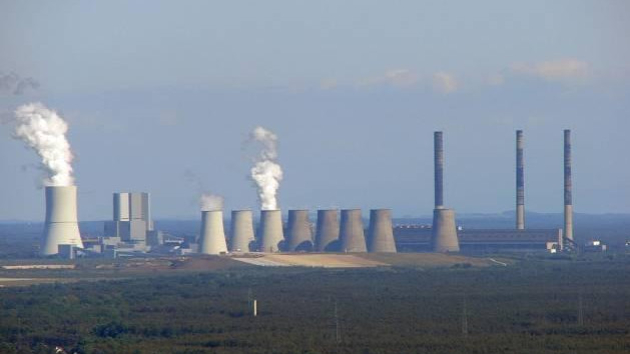
On May 21, 2026, a revolving credit facility (RCF) of €2.2 billion was issued for the benefit of Energetický a průmyslový holding (EPH), one of Europe’s major polluters and a key player in the expansion of fossil gas on the continent. France’s four largest banks — BNP Paribas, Crédit Agricole, Société Générale, and the Banque Populaire Caisse d’Épargne (BPCE) group — are all involved in this transaction, despite its incompatibility with their commitments to achieve carbon neutrality. The gap between this financing and their public statements raises questions about their genuine willingness to act for the energy transition and the credibility of their climate strategies.
When contacted by Reclaim Finance regarding this RCF granted to EPH, several involved banks [1] confirmed that this transaction aligns with their policies and climate objectives, citing several arguments.
One involved bank stated that “EPH’s transition plan is credible” and that its coal phase-out aligns with the requirements of its sectoral policy. Another involved bank even directly echoed EPH’s talking points:
“We do not normally comment on specific clients and transactions. EPH has however asked us to refer you to their 2025 annual report and in particular to page 351 (coal phase out plans) and page 325 (decarbonization targets and their commitment to exit coal by 2030).”
EPH, a smokescreen transition
EPH indeed wants us to believe that its mission is to “support the energy transition in a socially sensible and responsible manner” [2]. While banks hide behind the company’s claims, it is public knowledge that EPH is a giant in gas and coal.
In reality, this Czech private group, majority-owned by Daniel Křetínský, is a subsidiary of EP Group, which remains to this day Europe’s largest coal producer and the second-largest operator of coal power plants on the continent [3]. EPH has been publicizing its coal exit by 2030 for years [4]. However, since 2021, instead of closing its coal assets, the company has transferred a large portion of them to a new subsidiary, EP Energy Transition (EPETr), also owned by Křetínský [5]. This coal phase-out is nothing more than an illusion created by a sleight of hand.
At the same time, EPH currently operates 11.1 GW of fossil gas capacity across eight European countries and plans to develop an additional 5.5 GW [6]. EPH is thus the second-largest developer of gas power plants on the continent [7]. This RCF comes shortly after EPH’s recent collaboration with TotalEnergies to create TTEP, a new European gas giant. Everything indicates that EPH intends to maintain its fossil fuel-based strategy, even if it obstructs the EU’s goal of transitioning to a fossil-free, renewable-based electricity sector by 2035.
Convenient but baseless “green” claims
According to one involved bank, this RCF granted to EPH would be a green loan, with the use of proceeds defined in accordance with the Loan Market Association (LMA) provisions [8]. This is information we cannot verify, as the transaction has since been removed from the database provider’s records “for confidentiality reasons.”
While the LMA’s Green Loan Principles (GLP) can indeed apply to an RCF, the LMA itself acknowledges that tracking the use of funds is much more difficult in such cases. It states that “lenders must monitor and verify the sustainability information provided by the borrower throughout the loan’s duration, ensuring the integrity of the green loan product.” Banks are thus left at the mercy of the borrower’s goodwill, which they can only control ex post, through the borrower’s own reporting.
Yet, as early as 2025, when EPH issued a green bond, an analysis by IEEFA [9] demonstrated how unlikely it is that these “green” financings could genuinely put EPH on the path to energy transition.
If EPH’s opacity regarding the use of these “green” funds is already under criticism [10], there is reason to question how this new RCF would be any different. Banks should be all the more wary of being deceived, as S&P’s assessment of EPH’s Green Finance Framework highlights that “the framework includes significant investments in fossil fuel-based assets and infrastructure, as well as substantial exposure to them” [11].
EPH has thrived by betting on the increasing and permanent use of fossil fuels, and there is no indication that the company’s strategy has changed — quite the opposite. The transfer of its coal assets to a subsidiary — to hide them rather than close them — is a case in point. The company is doubling down on gas, despite its impacts in terms of energy price crises, ecosystem destruction, human rights violations, and health degradation. By providing massive support to EPH, BNP Paribas, Crédit Agricole, Société Générale, and the BPCE group are complicit in its climate-destructive strategy and are turning their backs on European climate objectives. It is urgent that banks formalize their break with fossil fuel expansion and include the development of new gas-fired power plants in their exclusion policies.
Notes for editors:
- The involved banks Reclaim Finance contacted are: BNP Paribas, Crédit Agricole, Natixis, Société Générale, ING, Lloyds Banking Group, and Caixabank. Other banks are also involved.
- EPH’s website.
- EP Group annually produces 48.1 million tonnes of coal and operates over 10 GW of coal power plants on the European continent. See Urgewald’s Global Coal Exit List.
- EPH’s website.
- Beyond Fossil Fuels, Behind the mask: investigating EPH’s coal exit claims, February 2025.
- Operational capacity includes capacities operated under TTEP, a recently created joint-venture with TotalEnergies. TTEP is also developing additional gas-fired power capacities, which are accounted for in proportion to EPH’s stake.
- Power Utilities Tracker.
- Loan Market Association, Green Loan Principles, March 2025.
- IEEFA, Examining the Credibility of EPH’s Green Bonds, August 2025.
- Fund Europe, Czech EPH green bonds face climate transition criticism, August 2025.
- S&P on EPH’s website, S&P-EPH Second Party Opinion, May 2025.
This item was originally published on Reclaim Finance's website here.