MUFG and the dystopian reality of TNFD reporting
Shona Hawkes, Advisor on Forests and Bank Accountability, Rainforest Action Network
Shona Hawkes, Advisor on Forests and Bank Accountability, Rainforest Action Network
Japanese megabank MUFG has the dubious honor of being both one of the world’s largest bankers of fossil fuels (5th) and linked to forest-risk financing in successive Banking on Biodiversity Collapse reports. Among OECD headquartered banks, MUFG was the largest creditor to forest-risk sectors in South-East Asia between 2018 and 2024. MUFG has also rigorously embraced the Taskforce on Nature-related Financial Disclosures (TNFD) – the controversial framework for company reporting on biodiversity – producing TNFD reports in 2024 and 2025.
This article examines MUFG’s TNFD reports, comparing this against the reality of its biodiversity practices and associated controversies. This shows that not only do MUFG’s TNFD reports fail to substantially address its impacts on nature and the people who protect it – TNFD is actually helping MUFG to gain new revenue by consulting on biodiversity.
MUFG has made shifts to its policies recently on mining and large-scale fishing. Its long-standing policies on other key areas for biodiversity – such as on forestry, palm oil or large-scale farming – as well as Indigenous rights – include significant loopholes. If MUFG’s policies or its disclosures are inadequate, its implementation is weak or if its claims cannot be meaningfully and independently verified – especially if communities, NGOs or others are presenting credible evidence of concerning practices – there is an obvious risk that a reasonable person reading the bank’s reports, disclosures and ESG statements will be left with an impression of its sustainability that far deviates from its actual practices and current controversies.
Nature reporting, without reporting impacts on nature
MUFG 2025 report focuses on “single materiality”. TNFD’s minimum baseline recommendations don’t call for companies to report their impacts on nature and biodiversity (“double materiality”). It only calls for companies to report on how biodiversity materially impacts their business.
TNFD’s baseline measures are below the minimum legal requirements on disclosure in some countries. Instead of adopting double materiality as a baseline – and allowing companies to rise to meet this standard over time – TNFD’s base standard is so weak that it requires a caveat that where a company is legally required to undertake double materiality – or simply wishes to – it should.
What MUFG’s adoption of the TNFD baseline means is that MUFG’s report doesn’t, for example, acknowledge that dozens of organizations have raised concerns that its financial services may contribute to the extinction of one of the 100 most at-risk species in the world – the Bulmer’s fruit bat in Papua New Guinea. The Papua LNG project will take place in an area with over 100 new-to-external science or undescribed by external science species – species that have never been studied by external scientists or any threatened status assessed. This includes a species of gecko and multiple damselfies. The project also includes a staggering 27 threatened species – those that the IUCN Red List has deemed as already at high risk or extreme risk of extinction in the wild. This includes iconic species such as the Pig-nosed turtle.
There is no greater threat to biodiversity than the existential loss of a species that has evolved over millennia, lost to all future generations. Reporting on extinction risks should be a no-brainer for an initiative with the words “nature” and “disclosure” in its title.
Yet TNFD is so poorly conceived a company can simply choose not to report on extinction risks if it doesn’t believe that this will be “financially material”- for example, representing a 10% shift to the valuation or revenue of a company. Or well-conceived – if your purpose is to evade meaningful transparency.
MUFG’s report focuses on its financially material “opportunities” and “risks” linked to biodiversity – mostly opportunities. This aligns with a pattern that MUFG itself noted in 2022 that “there is still a lack of trust regarding organizations’ ESG claims and a perception that companies are guilty of greenwashing or only reporting on positive progress.”
One of the worst financiers of biodiversity loss gains new business advising others on TNFD reports
MUFG’s TNFD reports have five focus areas. The first is “consulting”. In the various dystopian scenarios various groups – often correctly – predicted about the TNFD, none went this bleak.
MUFG – whose bank manages to be both one of the worst banks on climate change and biodiversity loss will now be sharing its “expertise” on nature with clients, for a fee. This is via its MUFJ Research and Consulting (MURC) arm.
Rather than MUFG viewing TNFD as a calling to account for one of the world’s systematically important banks to clean up its act on biodiversity – MUFG appears so confident in TNFD’s toothlessness that the bank views it as a business opportunity.
In its 2024 TNFD report the bank noted “we have a track record of supporting companies that are taking the lead in disclosing TNFDs in the natural capital field by leveraging our strengths in supporting environmental issues and sustainable finance.”
Not only will MUFG be using TNFD to greenwash its own reputation, it appears that TNFD has gifted it a new income stream to help others do the same.
Other notes on MUFG’s TNFD report:
-
Another pillar of MUFG’s five focus areas is “blue finance” – a branding offshoot of “green finance”. This reiterates MUFG’s TNFD’s focus on creating new business – not cleaning up its existing business. Serious questions have already been asked about MUFG’s sustainability products. In 2024, the credibility of MUFG’s “sustainability-linked loan” to Royal Eagle Group gained particular attention. In 2020, MUFG was also an underwriter on a “sustainability linked” bond to timber company Suzano (also a TNFD taskforce member) – a company that itself assessed in 2020 that it was possible it could face up to 324 civil and environmental proceedings.
-
MUFG emphasizes that it is “working with stakeholder, including national and local governments and companies, to develop solutions and create businesses for achieving nature positive”. It also adds that on partnership it is using “space innovation strategies” through the manufacture, launch and utilizing the ‘value gained’ from space-related equipment, including satellites. This appears resonant of TNFD’s framing of the biodiversity crisis as a “data problem” – that cannot be fixed until new data comes on line. This evades the bigger point that TNFD’s own baseline doesn’t suggest that companies report their impacts on nature, and that banks such as MUFG are failing to act on the ample data available about the environmental and human rights risks of companies that they finance. For example, in April 2025, Rainforest Action Network reiterated that MUFG’s Indonesian subsidiary Bank Danamon has continued to finance clients in clear breach of MUFG’s policies “providing $281 million to an oil palm group destroying peatlands and causing sprawling, recurring fires”.
-
MUFG’s 2025 TNFD reports also include two pages on its approach to human rights. However, it does not state: How many human rights complaints does it face? What is the nature of those complaints? How do those raising complaints view MUFG’s response? Despite formal complaints to banks being exceedingly rare, currently MUFG appears to be facing at least five recent formal human rights complaints (1, 2, 3, 4, 5), each related to different companies or projects. While most focus on human rights, all five include concerns related to biodiversity impacts and risks.
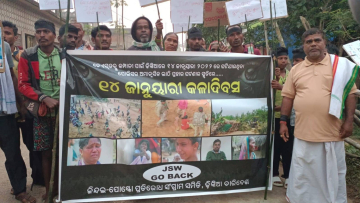
This includes allegations related to public health harms (including premature deaths) arising from toxic pollution or the denial of Indigenous Peoples rights to care for sea country. This includes a new case filed by Indonesian communities, together with civil society organizations, against MUFG for its financing to Perusahaan Listrik Negara (PLN); a case filed by communities in South Texas regarding its financing to the Rio Grande LNG terminal; a case filed by communities and movements in India regarding MUFG’s relationship with a steel company accused of Indigenous rights abuses and benefiting from rights violations against human rights defenders; and an outstanding formal complaint filed by Tiwi and Larakia elders regarding MUFG’s financing to Santos. To date, it appears that MUFG has not substantively responded to any of these complaints. In December 2025 – after issuing two TNFD reports – MUFG became the subject of the world’s first formal complaint to the Equator Principles which relates to its reported position as financial advisor to the Papua LNG project.
‘Disclosure’ not transparency
With the exception of sustainability-linked loans and some project finance loans, MUFG itself does not disclose which companies it lends to. This highlights that many of these allegations and formal complaints required communities, NGOs or journalists to uncover the financing link to MUFG. Presumably, this is because MUFG structures its standard client contracts in ways that do not incorporate basic company-name disclosure provisions – allowing the bank to hide behind confidentiality concerns. Even on project finance – where initiatives to support project name disclosure have been in place since at least 2013, MUFG chose to finance 15 projects that did not agree to be named as a client of the bank. This actively prohibits communities from knowing if projects affecting them should be meeting MUFG’s sustainability policies.
TNFD has emphasized high-level aggregated data that is yielded by companies and takes a form that cannot be independently fact-checked against realities on the ground. At a glance, few, if any of the formal complaints rely on aggregated company-supplied data. However, as these examples, and many others show – the barriers to transparency that environmental human rights defenders, Indigenous Peoples and many others have had to overcome are those that prevent them from knowing if a bank is financing companies operating in, or sourcing from their area or not. TNFD promotes so-called “disclosures” but fails on actual transparency. This is consistent with the conflict of interest of the TNFD 2023 framework being overseen by a taskforce that included multiple banks that currently face OECD or legal complaints, UN Special Procedures communications or formal greenwashing complaints – suggesting that they also had an incentive to avoid measures to encourage actual transparency.
It appears extremely unlikely, if asked, that the environmental human rights defenders, Indigenous Peoples and other affected communities filing formal complaints or raising concerns more broadly would view MUFG’s TNFD reports as helpful to their efforts to seek remedy and redress or their calls for MUFG to end financing linked to companies or projects that face allegations of serious environmental and human rights risks. It appears feasible that many would see MUFG’s reports as greenwashing or obstructing oversight of biodiversity and human rights concerns, including by investors. If they understood that – according to MUFG’s own reports – TNFD has enabled the bank to materially profit from TNFD by expanding its consulting business they may also view the outcomes of TNFD as fundamentally unjust if it allows a company group facing serious allegations of contributing to, or being directly linked to, human rights and environmental harms to continue similar activities to those that have attracted complaints; to retain 100% of the profits that it made from such activities; and to financially benefit by expanding its business to position itself as a nature leader and consultant.
See also case studies examining the TNFD reports of Vale and Bunge. A catalogue of resources related to rights-holder and civil society concerns about the TNFD can be found here.