Profits through destruction - The other annual balance of Andritz

On March 8th the Austrian company Andritz will present its financial balance for 2010. The company's CEOs will talk a lot about gains in business and record profits. What will not be presented is the price that had to be and will have to be paid by the ecosystems and affected people in the project regions.
ECA Watch Austria took a look at Andritz' socio-ecological balance of 2010. „Andritz' balance in terms of numbers and money may be good for the company, but the real balance for people and nature is disastrous. Andritz has become one of the most ruthless companies in its area of business. They participate even in projects that are abandoned by competitors," said Ulrich Eichelmann from ECA Watch Austria.
Andritz' socio-ecological balance based only on the company's three biggest projects Ilisu dam (Turkey), Belo Monte and dams along the Rio Madeira (both Brazil):
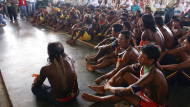
- Displacement of 85.000 to 100.000 people1
- Elimination of 100 to 150 species2
- Destruction of 210.000 hectares of unique landscape3
- Destruction of the antique city of Hasankeyf and other areas of significant cultural heritage along the Tigris river
These numbers represent low estimates, a) because of the overall limited knowledge about species populations in affected areas, b) because they only include the directly affected people, not those who are effected downstream of the dam by the reduced water flow, the deterioration of water quality etc. and c) because not all of Andritz' projects could be included in this evaluation due to lack of project information.
In terms of the most disastrous projects one would have to add the "Bell Bay pulp mill" project in Tasmania/Australia, which is is on halt at the moment due to ongoing protest by environmental groups in the region. According to project plans, the installation and operation of this pulp mill would swallow 200.000 hectares of native forest and would produce 64.000 cubic meters of wastewater per day which would be led into the ocean, endangering nearby marine species.
For the company's reputation 2010 was a special year. The list of opponents has significantly grown: human rights, environmental and church organizations protested against Andritz. Demonstrations took place in Austria, France, Turkey, Tasmania and Brazil. The NGOs BankTrack and Les Amis de la Terre (Friends of the Earth France) put Andritz on a black list of companies which should be excluded from ethical funds.
Andritz more ruthless than other companies
Andritz even participates in projects when other companies pull out on ethical grounds. In the case of the Ilisu project in Turkey for example, where European governments and banks withdrew from the projects and even Andritz' partners in the building consortium pulled out, Andritz remained in the project. After a two year examination the governments of Germany, Austria and Switzerland had suggested the halt of the project. The European banks and construction companies followed the instruction, except Andritz. Instead, they proudly announced in mid-2010 their "biggest contract in history." (Andritz Hydro News No 18).
In September 2010 Andritz received bad news. The Bell Bay pulp mill project in Tasmania was stopped and a several-hundred-million-Euro deal for the Austrian firm was put on halt.
At the beginning of 2011 Andritz signed the contracts for the Belo Monte project in Brazil. Their shares increased in value, but this was no good news for the people and the nature in Amazonia. "Andritz' statements on the company's website concerning its sustainability policies appear quite cynical facing the reality on the ground. Andritz should create and follow social and ecological standards for their work in order to limit their negative impact on people and environment and to stay reliable," concluded Ulrich Eichelmann.
1 Displacement and loss of livelihood: Ilisu: 65.000-78.000 people, Belo Monte: 20.000 people, Rio Madeira:?
2 Extinction of species from the planet: Belo Monte: 100 fish species + unknown number of other species groupes, Ilisu: > 2 species, Rio Madeira: ?
3 Directly affected space through construction and opperation: Ilisu: 31.300 hectares, 400km of rivers, Belo Monte: 150.000 hectares (51.600 ha reservoir + dryed out stretches), Rio Madeira: 50.000 hectares.