

Dodgy Deal
Rovina Valley mining projectRomania
Project – Active
This profile is actively maintained
Profile by:
Centrul Independent pentru Dezvoltarea Resurselor de Mediu, Declic, Dezvoltăm Durabil Zona Munţilor Metaliferi, Ecou Rovina Bucureşci Association, Mining Watch Romania network & The Save Roşia Montană network
Centrul Independent pentru Dezvoltarea Resurselor de Mediu, Declic, Dezvoltăm Durabil Zona Munţilor Metaliferi, Ecou Rovina Bucureşci Association, Mining Watch Romania network & The Save Roşia Montană network
Roxana Pencea Brădățan - Declic campaigns director / founder of Mining Watch Romania, roxana@declic.ro, contact@miningwatch.ro
Last update: 2026-10-28 10:29:46
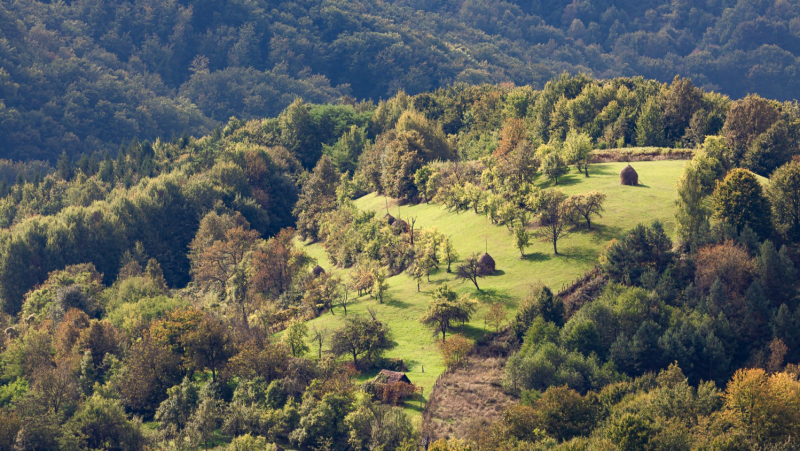
Rovina Valley, with haystacks and orchard trees on a hillside meadow, framed by forests. Photo: Mining Watch Romania
Project – Active
This profile is actively maintained
Profile by:
Centrul Independent pentru Dezvoltarea Resurselor de Mediu, Declic, Dezvoltăm Durabil Zona Munţilor Metaliferi, Ecou Rovina Bucureşci Association, Mining Watch Romania network & The Save Roşia Montană network
Centrul Independent pentru Dezvoltarea Resurselor de Mediu, Declic, Dezvoltăm Durabil Zona Munţilor Metaliferi, Ecou Rovina Bucureşci Association, Mining Watch Romania network & The Save Roşia Montană network
Roxana Pencea Brădățan - Declic campaigns director / founder of Mining Watch Romania, roxana@declic.ro, contact@miningwatch.ro
Last update: 2026-10-28 10:29:46
Why this profile?
Why this profile?
For many years, Euro Sun Mining (TSX:ESM) has been trying to uproot the people of the Rovina Valley to realize one of Europe's largest open-cast gold and copper mines. From its onset in 2016, the venture has been marked by scandals, permitting setbacks, and sustained local and national opposition. Many also associate the proposal with corruption at the highest political level.
The proposal itself raises major red flags: forest loss, biodiversity impacts, involuntary resettlement & expropriation, water-contamination risks, and a potential transboundary impact as well as its proximity to sensitive and protected landscapes in the Apuseni region. Despite years of promotion, the project faces legal challenges, delays and growing opposition, and has yet to meet EU environmental standards.
What must happen
Prospective financiers, underwriters, and corporate partners face profound financial and other risks, and should entirely withhold financing and corporate support from the Rovina proposal.
Financial institutions should demand Euro Sun Mining make available its full CRMA "strategic project" application and all supporting environmental and social impact assessments, rejecting any attempts to hide behind confidentiality clauses.
Potential backers should mandate an independent and comparative review of resource estimates over time, the project's high-risk tailings-dam design and a rigorous, updated water-quality baseline study. These steps are vital to address some of the unaddressed risks; including critical safety and environmental hazards identified by expert Dr. David Chambers in 2022.
About
| Take Action! |
| Sectors | Copper Mining, Gold Mining, Mining |
| Location |
|
| Status |
Planning
Design
Agreement
Construction
Operation
Closure
Decommission
|
| Website | http://eurosunmining.com |
The proposed Rovina Valley gold-copper mine is 100% owned by Euro Sun Mining (TSX:ESM), a single-asset Canadian mining junior that operates through its subsidiary, Samax România - an entity controlled via a British Virgin Islands offshore shell company.
The proposed mine involves exploiting three gold-copper deposits (Colnic, Rovina: open pit; and Ciresata: proposed for underground mining), over a total concession of 2,770 ha (27.7 km²), with an effective mining area of about 470 ha, in Bucureşci commune, Hunedoara county.
Euro Sun Mining Inc. (formerly Carpathian Gold) wholly owns the proposal through Samax România SRL, itself controlled by Samax România Ltd., an offshore shell company in the British Virgin Islands. Flagged by journalists as early as 2015, this structure was exposed in the Panama Papers, where the BVI vehicle drew scrutiny for hiding its ultimate beneficiaries through Mossack Fonseca. Euro Sun later restructured, bringing a Cyprus-registered counterpart, Samax Romania Limited (HE 378103), into the ownership chain. Civil society organisations continue to criticise this use of tax havens and the lack of transparency around the project.
The exploration license was obtained in 2005. In 2012, the company applied to convert it into a mining (exploitation) license, which it received in 2015. The ratified version was published in Romania's Official Monitor only in 2019.
The ore grade is very low (0.16% Cu, 0.42 g/t Au), below the profitability threshold of comparable European mines. Although the deposit is large, extracting a low grade ore deposit is costly. The project involves two open pits hundreds of metres in diameter and depth, plus an unlined co-disposal waste facility and a separate cell for acid-generating tailings, both built using an “upstream” design – the riskiest type of mine-waste dam construction.
An environmental permit issued for the proposal's urbanism plans was annulled by the Cluj Court in October 2023 and irrevocably confirmed as unlawful by the Cluj Court of Appeal in April 2024 (Ruling 499/2024).
Since 2024, Euro Sun Mining has tried to revive the Rovina Valley project through the EU's Critical Raw Materials Act (CRMA). In March 2025, the European Commission granted it "strategic project" status, which brings fast-track permitting, overriding public interest and easier access to financing.
The project was recognised for copper, a strategic raw material, yet it is essentially a gold mine: Euro Sun itself calls it the "Rovina Valley Gold-Copper Project." At the prices in Euro Sun's 2022 feasibility study, gold which is not a critical raw material, would bring in about 77% of revenue in the first ten years and around 60% over the life of the mine.
Euro Sun's application has never been made public, and the confidentiality of the documents it submitted is now under judicial review before the EU's highest court.
Impacts
Impact on human rights and communities
Land and displacement: The waste-storage facility planned west of Rovina would require the expropriation and resettlement of residents in an area that has recently seen young families move in to farm and build a nature-tourism economy – a trend the mine would reverse as well as destroy in terms of Self-Sustaining Livelihoods. A technical assessment by David M. Chambers, Ph.D. in 2022, found that the company had not adequately addressed compensation for directly affected families or risks to public health, including drinking water.
One-sided consultations: Between 2021 and 2024, Euro Sun subsidiary Samax held a series of meetings with residents and local officials that deliberately excluded known opponents to the project. They presented only the project's benefits while downplaying environmental and health risks; thus deepening local mistrust and divisions. Similar messaging ran through social media and the mainstream press, promising jobs and development for an underdeveloped region, alongside company-funded CSR projects.
Community organising and legal wins: Landowners in Bucureşci, Criscior and Buceş have organised as "Dezvoltăm Durabil Zona Munților Metaliferi" and the "Ecou Rovina Bucureșci" Association, opposing the project for years with backing from the Save Roşia Montanǎ network. "I’ve asked Euro Sun several times what they intend to do if people refuse to sell their land to make way for this mine – and I’m yet to receive a response," said local landowner Adriana Maucher.
In 2022, 15,917 citizens signed a petition calling on the Ministry of Environment for an official impact assessment. In November 2021, Maucher donated land within the project footprint – directly under the future tailings ponds – to the NGO Declic, thereby blocking construction planned for 2022, since the mine’s development depends on securing all property rights across its footprint. Declic went on to buy land at the epicentre of the Colnic open pit in 2023.
Impact on climate
Gold and copper open-pit mining is among the most greenhouse-gas-intensive extractive activities. Rovina's own Environmental Report acknowledges this directly, stating in its "Climate" chapter that the project is a direct emitter of greenhouse gases. Clearing some 200 hectares of forest removes an existing carbon sink at the same time as adding new emissions sources, a double climate cost the company has never quantified.
Despite this acknowledgment, no genuine climate impact study exists. It presents no emissions figures, no scenarios, no mitigation plan, no consultation record.
That absence is striking given the well-documented emissions from similar operations. Haul trucks are consistently found to be a large source of emissions at an open-pit mine. The choice of open-pit method compounds this: open-pit mines generate roughly twice as much CO2 per ounce of gold produced as undergound mines, since open-pit operations process about five times the volume of ore for a comparable yield. Because Rovina is planned as an open-pit operation across two deposits, its emissions-per-ounce are structurally worse than an underground alternative would have been. Euro Sun's public messaging around the absence of cyanide and wet tailings, while relevant to toxic-waste risk, does nothing to address this category of emissions. Mine closure and post-closure maintenance are also not detailed in terms of emissions, as tailings and waste-rock management typically continue to require energy for grading, monitoring and water treatment long after extraction ends, with long-term structural stability and monitoring requirements extending far beyond the operational period.
Finally, regarding the company's forest-clearance plans, most carbon emissions from deforestation occur immediately, while above-ground biomass in a replacement forest can take 60-100 years to recover to old-growth carbon-stock levels. As such, felling mature forest releases decades of accumulated carbon stock within months, while any replacement sink would take decades to reabsorb even a fraction of that amount.
This gap was significant enough that Romanian courts cited it, alongside missing transboundary and biodiversity assessments, as grounds of annulling the project's environmental permit in 2023 and again on appeal in 2024. In short: Rovina has no independent, quantified estimate of its annual or lifetime greenhouse gas emissions, only a one-paragraph admission that the mine will emit substantial greenhouse gases, with nothing to measure or manage that impact.
Impact on nature and environment
Protected areas: The project footprint borders the Vulcan Mountain nature reserve (IUCN category IV and Natura 2000 site). The Cluj Court of Appeal's 2024 ruling found the environmental permit unlawful partly because it lacked an Article 6(3) Habitats Directive assessment and failed to evaluate the project's possible significant impact on the Rovina Valley stream and nearby Natura 2000 sites.
Tailings dam design: The proposal would divert an underground river and store waste at both open pits using an unlined co-disposal facility and a separate cell for acid-generating tailings, both built to an "upstream" design, recognised as the highest-risk type of tailings-dam construction (the same design category implicated in 2014 Mount Polley dam failure in Canada). Independent expert David Chambers (CSP2, 2022) found the company’s own Technical Report does not rule out long-term acid rock drainage – it acknowledges the risk “could take decades” to materialise but does not address it – and the Technical Report contains no surface- or groundwater-quality predictions at all, which he called “a significant gap for any project assessment.”
Water contamination and cross-border risk: Goundwater is the typical source for drinking and for agricultural and livestock usage in the area. Euro Sun proposes an alternative drinking-water network, without providing clarity on whether it covers all current uses or secured community agreement. The 2024 court ruling also found no transboundary impact assessment had been carried out, even though pollution could reach Hungary via the Crişuri Oradea groundwater body (ROCR01) and the Crişul Alb river. Mine-closure costs (estimated at US$20 million) exclude long-term water treatment, and the Technical Report assumes, without solid justification, that these costs will be covered by selling used equipment.
Other impacts
Weak financial feasibility: By international standards, the ore grade is very low (0.16% Cu, 0.42 g/t Au), less than half the grade of the Roşia Poieni copper mine and far below operating copper mines in Spain or Greece. Between 2021 and 2024, the estimated mineral resource fell by 48% without explanation (Technical Report NI 43-101).
Reputational and financial track record: Euro Sun Mining (formerly Carpathian Gold) nearly went bankrupt after its Riacho dos Machados project in Brazil (2013-2014, rescued through a lender-forced restructuring). The company changed its name in 2016 partly to shed that history, and surfaced in the Panama Papers through a link to Mossack Fonseca, the Panamanian firm at the centre of the scandal. The company reported net losses of over US$10 million in both 2020 and 2021 and over US$3 million in 2025.
Trafigura and Glencore links: Trafigura is Rovina's primary commercial and financial partner (see Financiers below) and has its own record of proven corruption: in March 2024 it pleaded guilty in the US to a decade-long bribery scheme involving Brazil's state oil company Petrobras, paying over US$126 million in fines and forfeiture, and in January 2025 a Swiss federal court convicted the company of bribing an Angolan state-oil official, ordering it to pay over US$148 million in fines and compensation. Glencore, which signed an October 2024 memorandum for a possible secondary offtake role, has its own record of corruption convictions in the US and UK (2022).
Macquarie links: Macquarie Bank is Rovina's institutional debt arranger to leverage Trafigura's existing footprint. Macquarie has faced a string of severe penalties for systemic control failures and deceptive conduct. In March 2026, the bank was hit with a US$35 million penalty for systemic failures and misleading conduct related to the misreporting of tens of millions of short sales over more than a decade. In September 2024, Macquarie was handed a record fine by the Markets Disciplinary Panel for failing to block suspicious, manipulative trading orders on the electricity futures market, a failure regulators described as reflecting "serious, prolonged and potential systemic failures" by the bank. In December 2025, a former Macquarie banker was criminally indicted by German prosecutors in Cologne over his role in the "Cum-Ex" dividend tax fraud scandal, and the bank has already paid over €100 million in settlements to German authorities in connection with the affair. In November 2024, the UK's Financial Conduct Authority (FCA) fined Macquarie £13 million for serious, prolonged control failures that allowed a single trader to fabricate over 400 fictitious trades undetected for nearly two years. Additionally, in April 2024, the bank was ordered to pay a US$10 million penalty for failure to implement adequate fraud controls, which allowed a corrupt third-party financial adviser to fraudulently withdraw money from clients' cash management accounts undetected for over three years.
Financiers
Euro Sun has announced a multi-facility financing package of up to US$200 million with Trafigura, alongside a non-binding Memorandum of Understanding for an additional US$400 million senior debt facility with Macquarie and Trafigura, yet most of this funding remains conditional on completing land purchases, and obtaining key regulatory authorisations, while permits including the environmental permit, have been irrevocably suspended in court and the project is entangled in local legal disputes.
Macquarie Bank & Trafigura proposed US$400 million senior debt facility: On 3 September 2026, Euro Sun Mining signed a non-binding memorandum of understanding with Macquarie Bank Limited and Trafigura to work together, over an 18-month mandate period, on a proposed senior project finance facility of up to US$400 million to fund construction and development of the Rovina Valley project. The MoU is binding only as to appointment and process and it is not a financing commitment. It also gives Macquarie a right of first refusal to participate in up to 15% of any alternative financing Euro Sun raises during the mandate and for 12 months after. Type of involvement: proposed senior project debt.
Trafigura US$200 million pre-development facility and US$3 million equity investment: This new MoU builds on an existing US$200 million commitment from Trafigura announced in December 2025, described by the company as a pre-development facility, which remains active and unaltered. Separately, Trafigura's subsidiary Urion Investments Holdings Limited agreed a term sheet for a US$3 million strategic equity investment in Euro Sun, to close around 4 September 2026, under which Urion would subscribe for about 21.5 million Euro Sun units (one common share plus half a warrant each) at C$0.19 per unit. Together, these arrangements make Trafigura Rovina's dominant commercial and financial partner and secure its position as the project's primary offtake buyer for copper and gold concentrate. Type of involvement: pre-development finance, direct equity investment, and offtake agreement.
Glencore plays a secondary role: Glencore, which signed an October 2024 memorandum for a possible offtake agreement, has since been relegated to a potential secondary commercial buyer as Trafigura's financing and equity deals have consolidated its position as the project's dominant partner.
Institution type
Finance type
Year
Companies
Project sponsor
Euro Sun Mining Inc.
CanadaFormerly Carpathian Gold — Canada (Toronto, TSX:ESM) — wholly owns (100%) the Rovina Valley project through Samax România SRL.
No companies
Other companies
Samax România Ltd
Virgin Islands, BritishWholly owns Samax România SRL; the opacity link flagged as early as 2015 and referenced in the Panama Papers.
Samax România SRL
RomaniaThe license-holding operating subsidiary in Romania (historically registered at an apartment address in Baia Mare; now based in Hunedoara county).
No companies
Governance
Norms & standards
Other regulations
Applicable norms and standards
Legal and regulatory record
- Cluj Court ruling in case 5220/117/2022 (October 2023) and Cluj Court of Appeal Ruling No. 499/2024 (April 2024) — annulling the environmental permit for lack of a transboundary impact assessment, no Habitats Directive Article 6(3) assessment, and unaccredited experts
- CJEU referral by the Cluj Court of Appeal (case 1634/117/2025), pending — on the validity of Article 46 CRMA (confidentiality of "strategic project" documentation) against the Aarhus Convention and EU primary law
EU regulations and directives
- Regulation (EU) 2024/1252 on Critical Raw Minerals (CRMA), Articles 6, 11-12 and 46
- Habitats Directive 92/43/EEC, Article 6(3), transposed nationally via Government Emergency Ordinance 57/2007
- Regulation (EC) No 1367/2006
Maps
14636
capturdeecrandin20210519la14_36_01.png
center
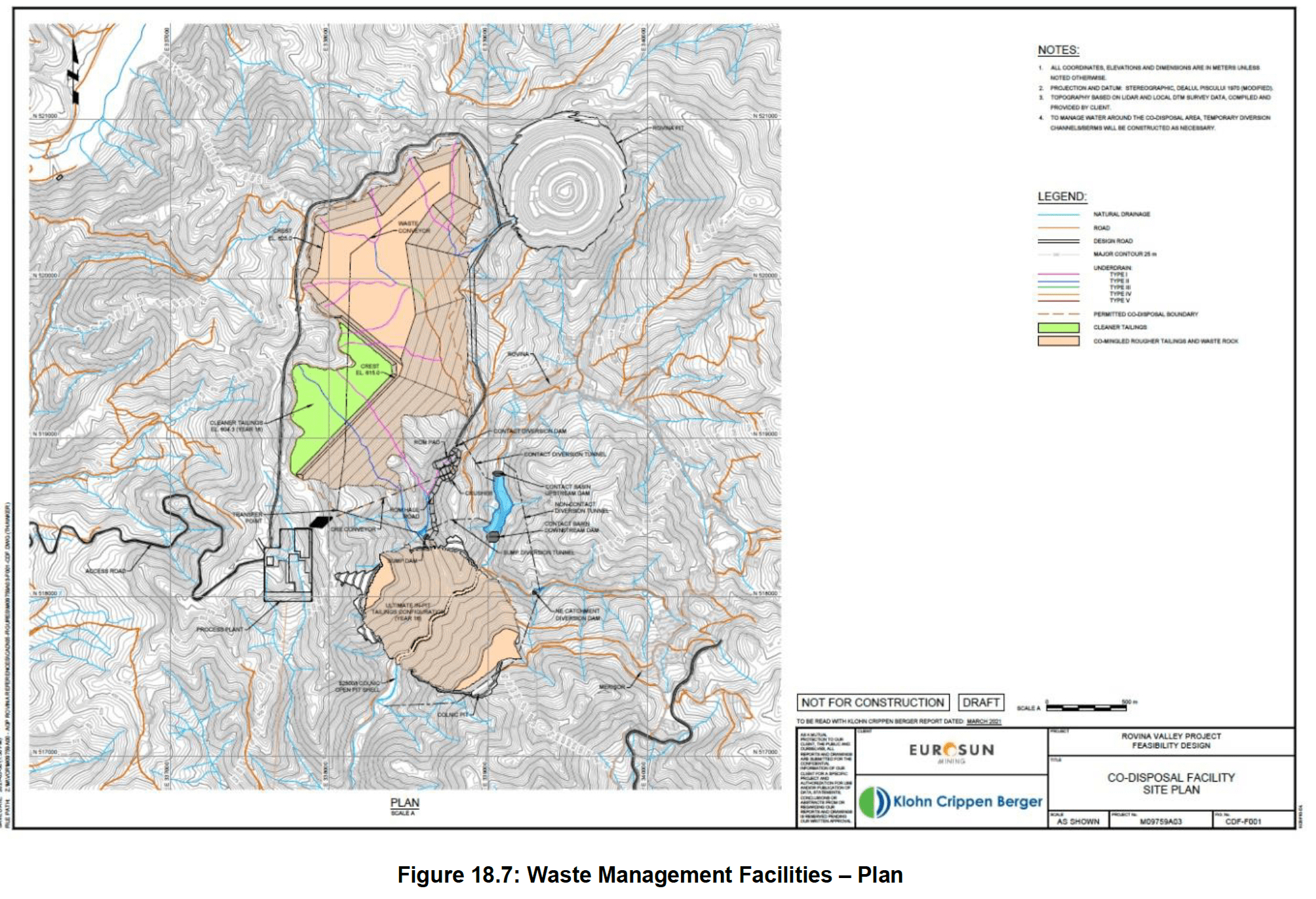
Map of the mining project.
Photo: By Klohn Crippen Berger, in NI 43-101 Technical Report on the Rovina Valley Project in Romania (p. 366), by New SENET (Pty) Ltd for Euro Sun Mining Inc., 2021.
14638
c4ee2354238445d59e621c0e6a66161a.jpeg
center
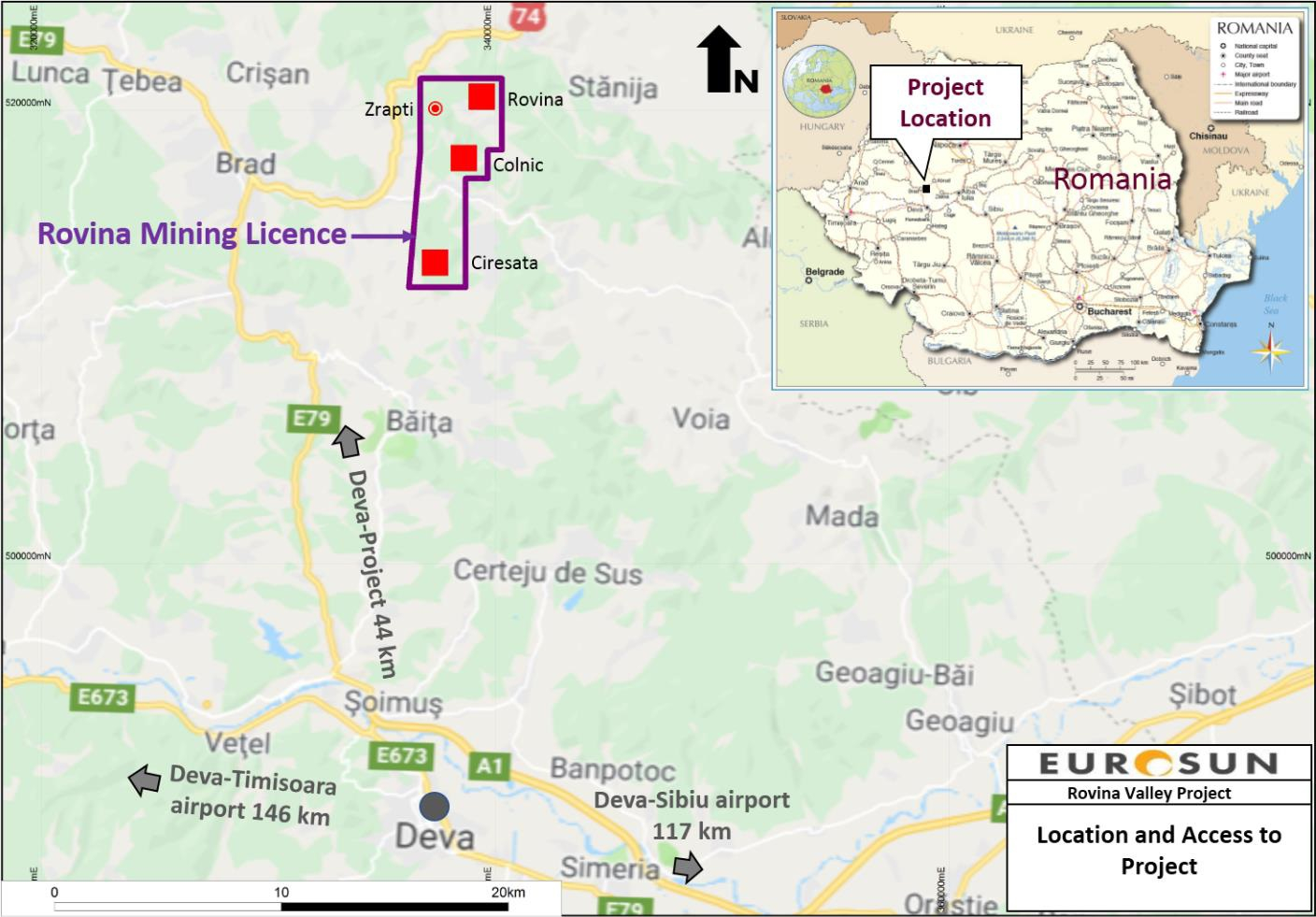
Location and access to project.
Photo: In NI 43-101 Updated Technical Report on the Rovina Valley Project in Romania (p. 88), by New SENET (Pty) Ltd for Euro Sun Mining Inc., 2022.
Resources
Documents
Images
Links
Rovina landscape
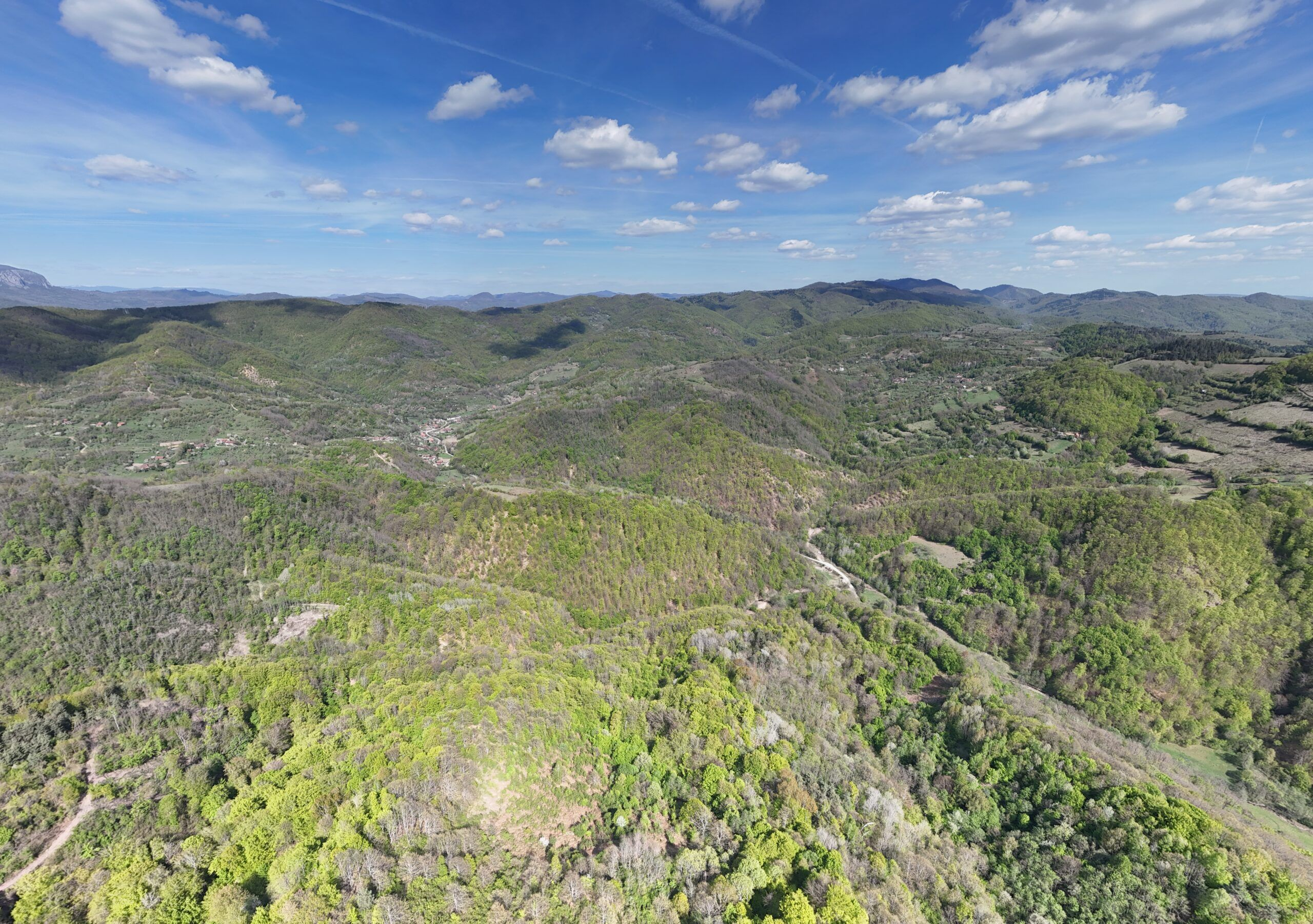
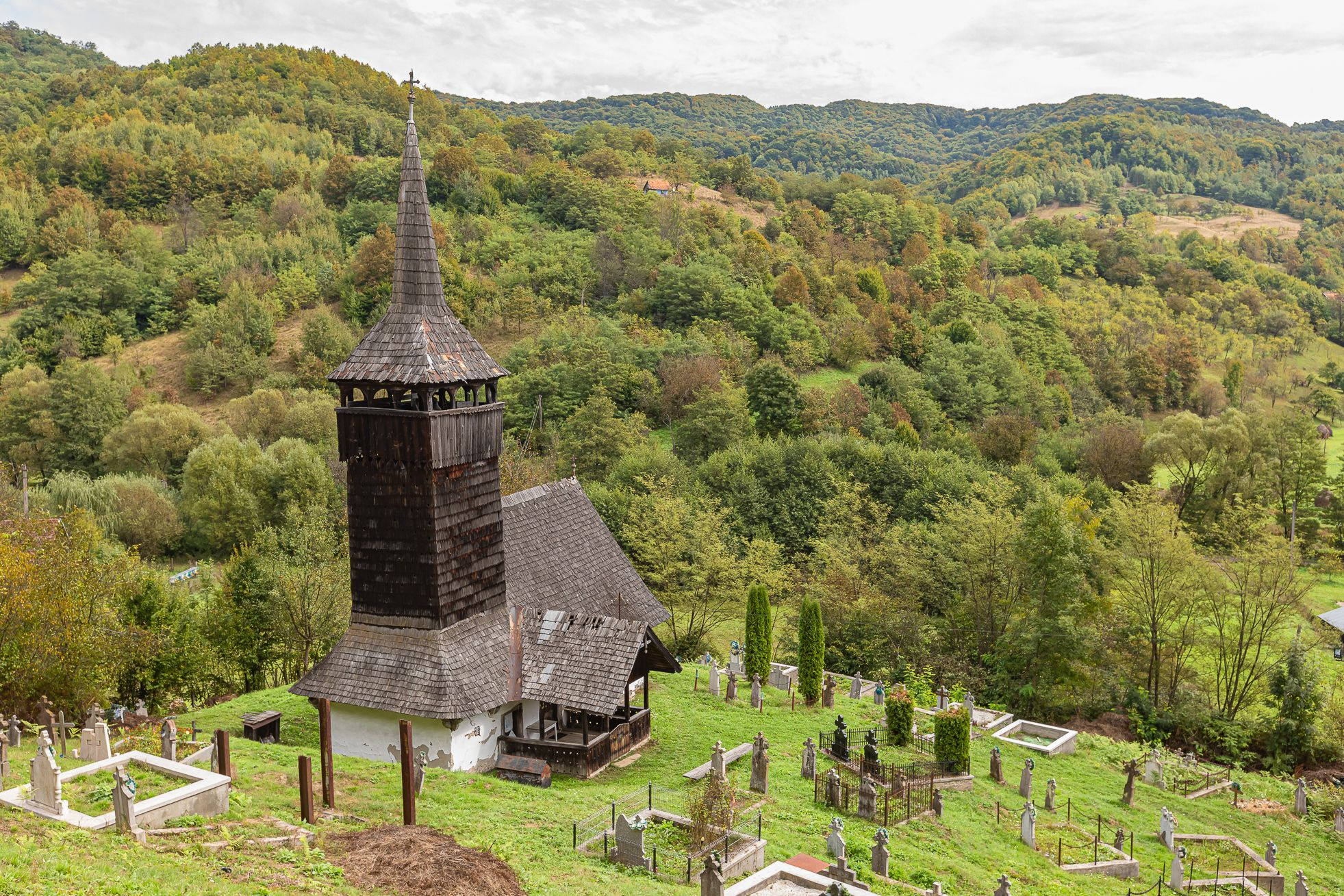
Rovina church
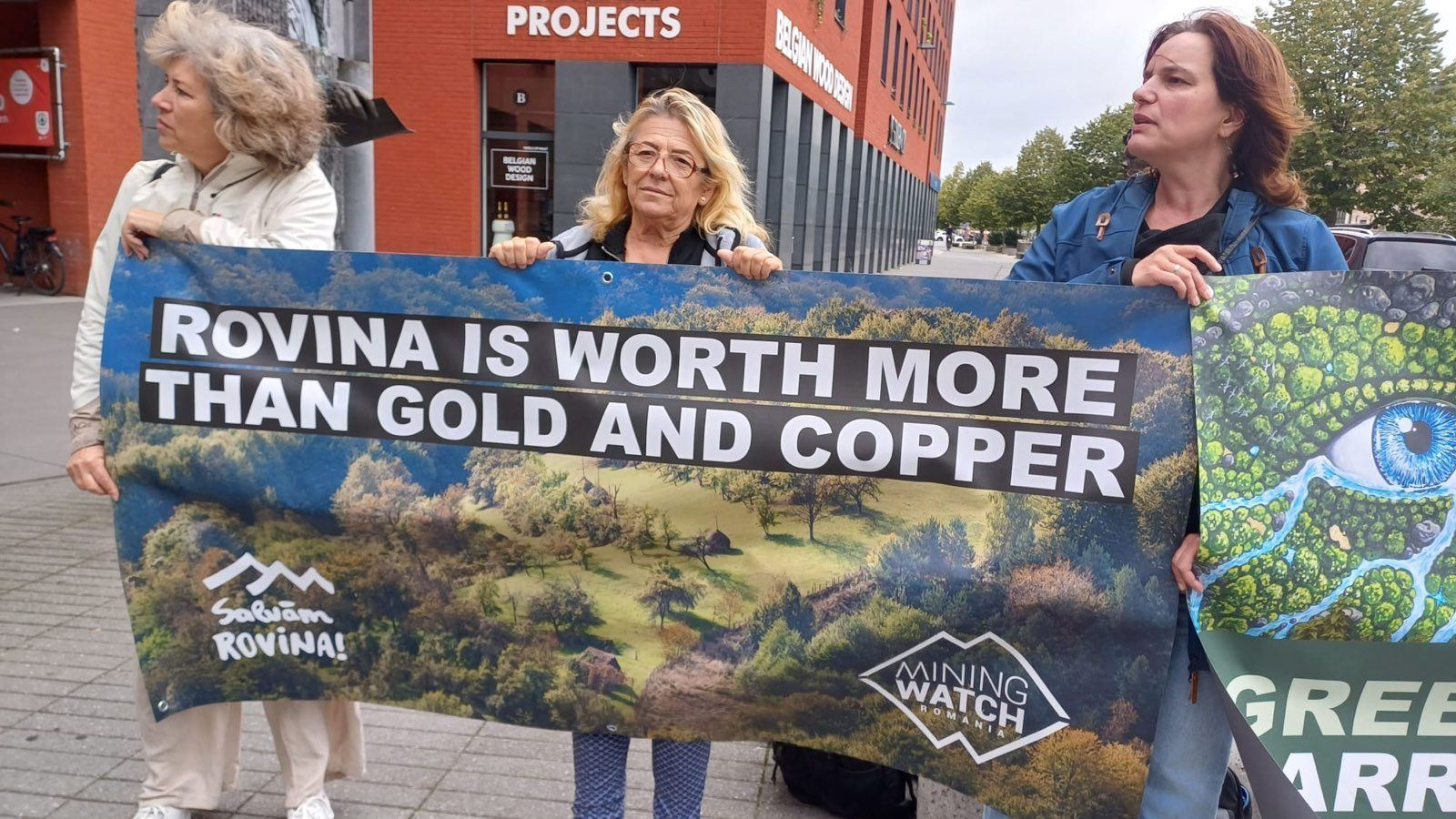
Demonstration in Bruxelles
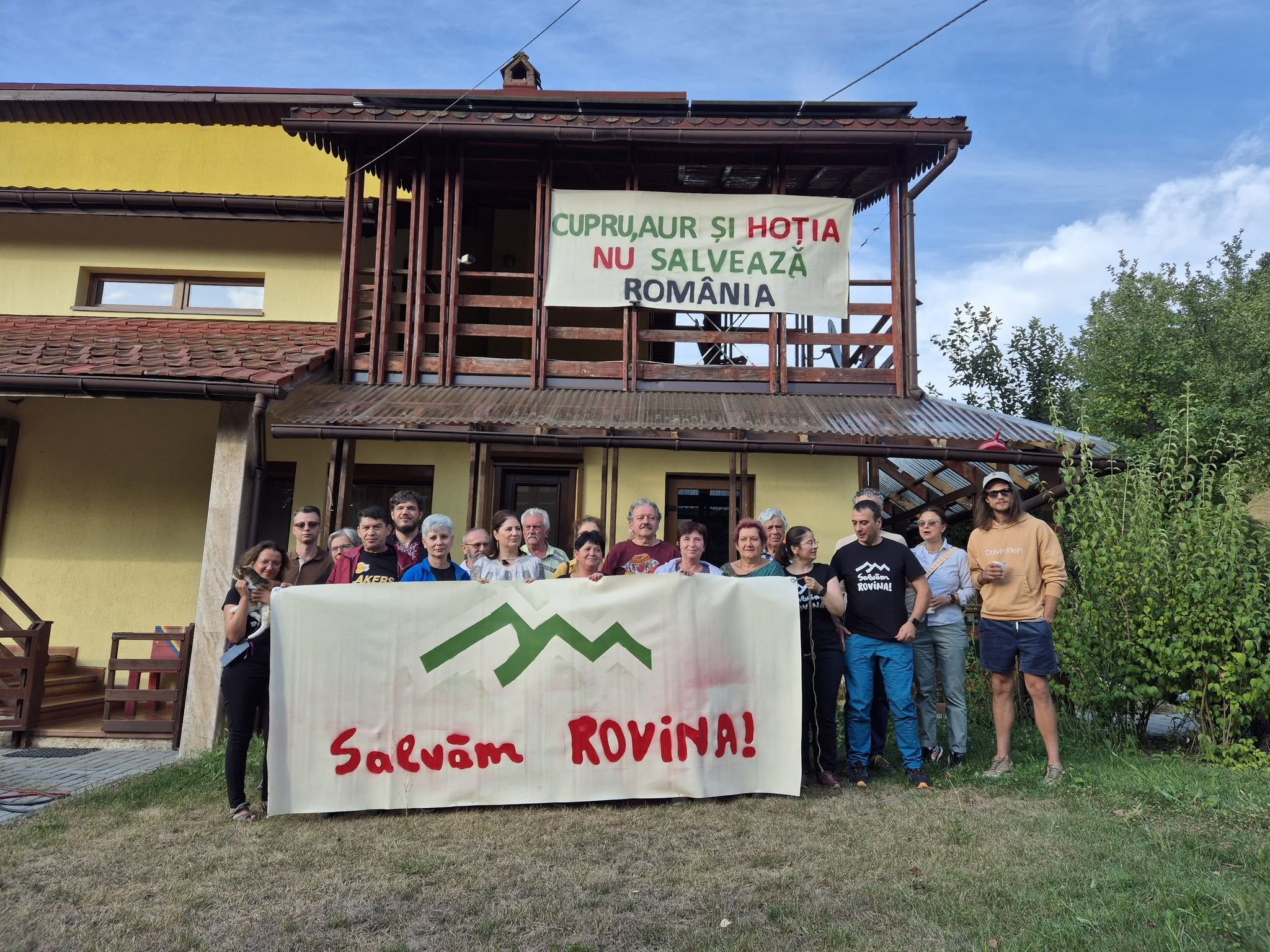
Opposition groups meeting
Updates
2026
2026-10-13 00:00:00 | 2026
3 September — Euro Sun Mining signs a non-binding MoU with Macquarie Bank and Trafigura for a proposed senior project finance facility of up to US$400 million, and a term sheet with Trafigura subsidiary Urion Investments Holdings for a US$3 million strategic equity investment, expected to close around 4 September 2026.
6 May — Senate rejects Mining Expropriation Bill. The measure was overwhelmingly rejected with 109 votes out of the 110 senators present. Even the bill's own sponsors voted to strike down their text. The final vote stands with the deputies.
7 April — 60 NGOs have lodged a complaint with the European Commission against the private company expropriation bill for strategic mining projects such as Rovina.
19 June — The Cluj Court of Appeal refers preliminary questions to the CJEU on the confidentiality of documents underpinning "strategic" CRMA projects (case 1634/117/2025), at Declic's request. The referral asks whether CRMA Article 46 can be read as a blanket confidentiality exemption, whether that reading is compatible with the Aarhus Convention, and whether it violates EU transparency and precautionary-principle obligations.
2026-10-13 00:00:00 | 2025
December — Trafigura agrees to a US$200 million pre-development facility with Euro Sun Mining, later described as remaining active and unaltered by the September 2026 MoU.
November — Euro Sun announces the "completion" of its EIA/ESIA study. This refers to finalising the study document itself, not a formal submission to the Hunedoara Environmental Protection Agency or the Ministry of Environment.
30 April — EU Decision 2025/840 granting the Rovina proposal "strategic project" status with fast-tracked permitting under the CRMA.
2026-10-13 00:00:00 | 2024
December — EEB, MinOb, Friends of the Earth Europe, Ecou Rovina Bucureșci and Mining Watch Romania jointly publish the "Gold and Copper Mining in the Rovina Valley" factsheet.
October — Euro Sun announces a memorandum for a possible offtake agreement with Glencore.
25 April — The Cluj Court of Appeal irrevocably confirms the 2021 environmental permit was unlawful (Ruling 499/2024).
2026-10-13 00:00:00 | 2023
October — The Cluj Court annuls the environmental permit for the zoning plan (case 5220/117/2022), following Declic's legal action.
7 July — Independent expert David Chambers (CSP2) publishes a technical review of the NI 43-101 report, commissioned by Declic, flagging unresolved tailings-dam and water-quality risks.
June — Declic buys land at the centre of the future Colnic open-pit mine.
2026-10-13 00:00:00 | 2021
24 November — Local landowner Adriana Maucher donates land within the project footprint to Declic, directly under the planned tailings ponds, blocking construction planned for 2022.
July — The Hunedoara EPA issues the environmental permit.
2026-10-13 00:00:00 | 2005-2015
2015 — Mining Watch documents the company's offshore ownership structure and contradictory public statements made by Samax România's management.
2012 — The company announces the discovery of the deposit and applies for an exploitation licence.
2005 — Carpathian Gold (later Euro Sun Mining) obtains the exploration licence through Samax România.
Send feedback
on this profile