Partner News
Met Coal Exit List 2026: Hundreds of new metallurgical coal mine projects put communities, ecosystems and our climate at risk
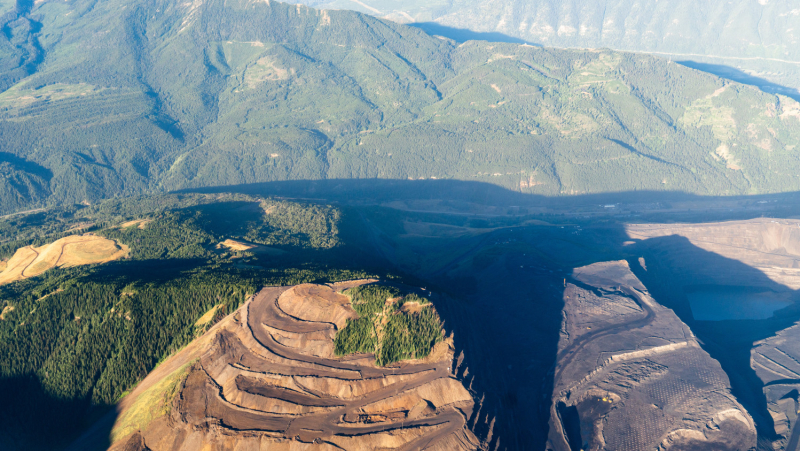
Elkview Coal Mine in British Colombia Canada . Photo: Ecoflight
Today, Urgewald released the 2026 edition of the Metallurgical Coal Exit List (MCEL), its public database tracking companies expanding metallurgical coal mining. The release is endorsed by 13 partner organisations.
Key Findings
- MCEL 2026 identifies 145 parent companies and more than 200 subsidiaries worldwide that are expanding their metallurgical coal mining activities.
- 273 metallurgical coal expansion projects are planned or under construction, in over 20 countries.
- These projects represent 580 million tons per year of planned new and expanded capacity.
The data exposes a widening contradiction at the heart of the sector: while demand for metallurgical coal is forecast to decline this decade, companies are still accelerating plans to expand supply. If realized, these projects would increase global annual met coal production by 52%, risking a wave of high carbon assets that may never pay back.
Metallurgical coal is mainly used in traditional blast furnace steelmaking, one of the most emissions-intensive industrial processes still operating at a global scale. Coal-based steel production remains a major driver of climate pollution, accounting for around 11% of global CO2 emissions.
Metallurgical coal expansion is not just a problem on paper. It is already tearing into landscapes, waterways, and wildlife habitats, with devastating consequences for people and nature. From Queensland, where new open cut coal projects threaten fragile bushland ecosystems and endangered koalas, to Canada’s Elk Valley, where mining pollution has been linked to fish with deformed skulls and twisted spines, the impacts are immediate and lasting.
Communities living downstream of these mines are left with contamination risks that can stretch for decades, while companies keep pushing ahead with new projects that would lock in destruction long after the world has begun moving away from coal-based steel.
The growing relevance of this issue is reflected in the Science Based Targets Initiative’s newest Net-Zero Standard for Financial Institutions. The standard now explicitly recommends the exclusion of metallurgical coal developers, referencing MCEL. Only one year after the dataset was first published, more than 150 financial institutions use MCEL to monitor and manage their exposure to metallurgical coal. Just this month, one of Finland’s largest pension funds, Ilmarinen, announced to divest from all met coal developers.
In response to the findings, Lia Wagner, met coal expert at Urgewald, said: “Green steel is no longer a future promise. It is here, it works, and is increasingly economically compelling. That makes new metallurgical coal mines a dead end. Financial institutions and policymakers must act now as there is no credible case for further expansion of metallurgical coal.”
About the Metallurgical Coal Exit List (MCEL)
The Metallurgical Coal Exit List (MCEL) is the world’s most comprehensive public database of met coal developers. It was designed to bring transparency to a sector that is often overlooked in the decarbonization process. As a sister database to the Global Coal Exit List (GCEL), MCEL enables financial institutions to better understand their exposure to this high-emissions industry and to develop new met coal exclusion policies. To ensure that our data creates lasting added value, MCEL is updated annually.
The full media briefing for the MCEL is available on Urgewald's website here.
Dodgy Deals
There are no active project profiles for
this item now.

There are no active company profiles for
this item now.