
Correspondent Banking: Where Dirty Money Slips Through
Platform to Protect Whistleblowers in Africa (PPLAAF): info@pplaaf.org, +33658016196
Platform to Protect Whistleblowers in Africa (PPLAAF): info@pplaaf.org, +33658016196
Correspondent banking, the system behind most cross-border payments, operates with little oversight and accountability, a new report published today by the Platform to Protect Whistleblowers in Africa (PPLAAF) and the Anti-Corruption Data Collective (ACDC) shows. Adding to recent evidence of serious weaknesses in anti-money laundering and other compliance areas at major banks, the report draws on leaked data to show how correspondent banks clear payments they barely scrutinise, rarely facing consequences when dirty money gets through, often with developing economies bearing the greatest costs.
The report sets out how these banks can be held accountable.
“Transaction-level data is often shielded from public and regulatory view, leaving these banks overlooked as an enabler of illicit financial flows,” said Jimmy Kande, PPLAAF’s Executive Director.
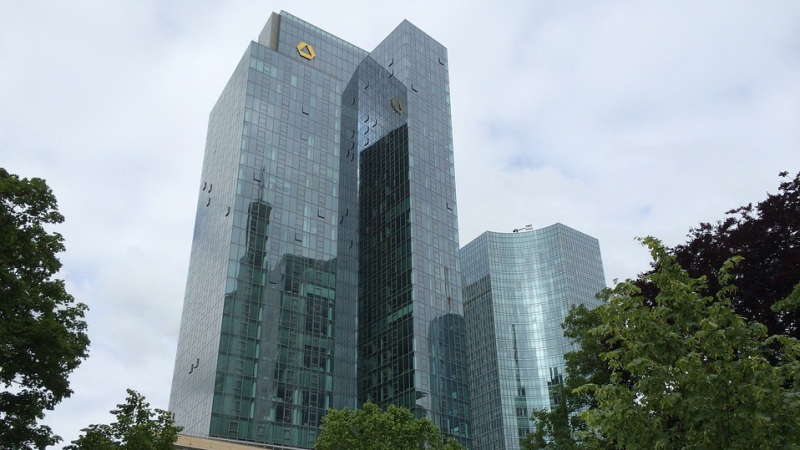
The banks mentioned in this report have not replied to PPLAAF and ACDC’s requests for comment. In previous response to Congo Hold-Up, BMCE, Citibank and Commerzbank stressed their general due diligence and ethics procedures.
A landmark case study: Congo Hold-Up
The correspondent banking system allows money to travel from one country to another: a third-party bank uses its access to a jurisdiction or currency, such as the US dollar, to process transactions on behalf of smaller “respondent” banks around the world. Correspondent banks ought to scrutinise unusual transactions.
The report’s landmark case study draws on Congo Hold-Up, Africa’s biggest leak of over 3.5 million internal documents from BGFIBank, which facilitated the looting of the DRC by then-president Kabila and his close associates.
Analysis of the documents shows that due diligence of DRC’s correspondent banks was minimal or performative. Between 2010 and 2020, the correspondent banks processed some USD 1.6 billion in outgoing foreign transfers performed by BGFIBank DRC, including glaring red flags for financial crime:
- Commerzbank appears to have approved a USD 1 million payment to Congo Construction Company (CCC), a shell company used to channel bribes to President Kabila’s circle.
- FIMBank (Malta) allowed companies of Glory Group, successor to the US-sanctioned Hezbollah financier Congo Futur, to funnel nearly USD140 million abroad despite warnings against this.
- Citibank approved at least USD17 million in transfers from Sicomines, a Chinese-Congolese joint venture, to CCC in 2016.
- BGFIBank International (Paris) moved about USD 450 million in suspicious funds into the international financial system, despite its own compliance officers repeatedly raising concerns.
How to fix the system
The report calls on regulators, supervisors, law enforcement and banks to step up scrutiny of high-risk relationships, freezing suspicious transactions until proven legitimate; use technology to strengthen, not replace, human compliance review; protect whistleblowers, including respondent-bank staff; and hold banks and individuals accountable through deterrent fines and, where appropriate, criminal liability.
“There is no substitute for real compliance,” said Kush Amin, legal advisor for PPLAAF. “There can be no real fight against money laundering and embezzlement of public funds abroad unless correspondent banks properly scrutinise what they clear, and regulators strengthen the rules and enforce them.”
Existing frameworks are weak.
In an unprecedented move, France’s National Financial Prosecutor (PNF) opened a preliminary investigation into BGFIBank International for “aggravated money laundering” in June 2022, but no known charges have been brought and such investigations remain rare.
A companion research paper, Money Laundering and Correspondent Banking: Evidence from the Democratic Republic of the Congo by academics working with ACDC provides the first empirical test of de-risking – the practice of banks cutting ties with clients they deem high-risk – using the Congo Hold-Up data. It finds that although de-risking dramatically changed which correspondent banks served BGFIBank DRC, it did not reduce the volume or number of transactions by suspicious clients.
Read the report here: Corresponding Banking – PPLAAF
About PPLAAF
PPLAAF is a non-governmental organisation established in 2017 to protect whistleblowers, advocate for them, and engage in strategic litigation when their revelations affect the general interests of African citizens. ACDC combines academia, data science and investigative journalism to expose and disrupt illicit financial flows arising from corruption and kleptocracy. The report is part of the Governance & Integrity Anti-Corruption Evidence (GI ACE) programme, hosted by the Centre for the Study of Corruption, University of Sussex, and funded by the UK Foreign, Commonwealth & Development Office.
This press release was originially posted on PPLAAF's website here.