
A ray of hope for a fossil-free banking sector shines from Santa Marta
Camilla Perotti | Climate Campaigner at BankTrack
Camilla Perotti | Climate Campaigner at BankTrack
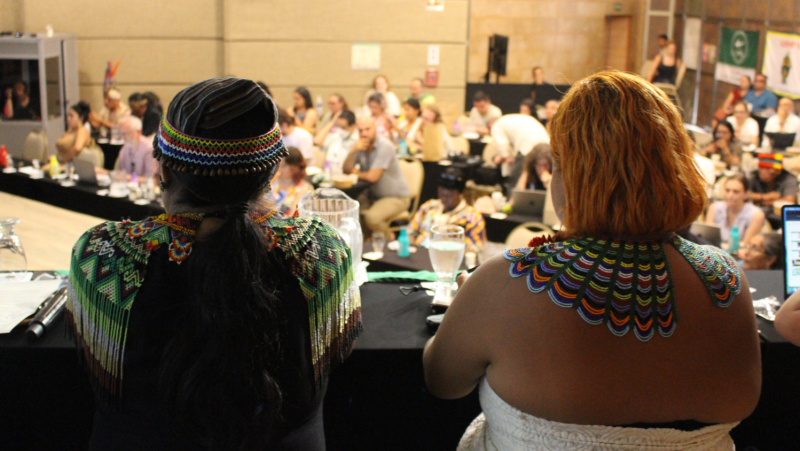
Fifty-seven countries just convened in Santa Marta to discuss how a transition away from fossil fuels can be made possible. The talks no longer focused on if countries should commit to a fossil fuel phase-out, but how. This has been the main stalemate of COPs since at least Dubai in 2023, when countries first pledged a “transition away from fossil fuels”. While the conference has not delivered any legally binding outcome, it signals a potentially meaningful shift for the banking sector. Countries hosting the headquarters of major fossil-financing banks, including Australia, Canada, France, and the United Kingdom, were in attendance.
The overall feeling, when governments, CSOs, Indigenous representatives, and several other stakeholders first gathered last Friday, was that of a severe, suffocating urgency. Urgency to have an honest and constructive dialogue, far from the frustration generated by the most recent UN COP proceedings. As Kumi Naidoo, president of the Fossil Fuel Treaty Initiative, declared during the official conference opening: “Pessimism is a luxury that we simply cannot afford.”
Phasing out finance for fossil fuels in Santa Marta
BankTrack was in Santa Marta to do what we do best: push for a rapid phase-out of financing for fossil fuel companies and projects. We were in Santa Marta because it is not acceptable that banks have poured more than USD 7.9 trillion into fossil fuels since the Paris Agreement was adopted.
It was refreshing to see the importance of overcoming public finance debt, which still cripples numerous countries in the Global South and keeps them locked in a fossil fuel vicious cycle, front and centre on the agenda. While intimately linked, the private financial flows to the fossil fuel industry, however, were not prioritised on the agenda, and it was therefore our duty to put them on the map.
Over the last two years, we have witnessed several instances of commercial banks backtracking on their exclusion policies, which were not perfect and riddled with loopholes to start with. In 2025, the Net Zero Banking Alliance fell apart, merely four years after it was launched with great enthusiasm at COP26 in Glasgow. This showed that voluntary exclusion policies, as well as voluntary initiatives, are not reliable and effective tools to limit private finance for fossil fuels.
Together with our partners RAN, Amazon Watch, Stand.Earth, Friends of the Earth US, Oil Change International, and ReCommon, and with the collaboration of Parliamentarians for a Fossil Free Future and several representatives of South American Indigenous Peoples, we organised a side event to raise attention on the fundamental necessity of ending private finance to fossil fuels. We also published a dedicated policy brief to support “the coalition of the willing” to rein in fossil finance.
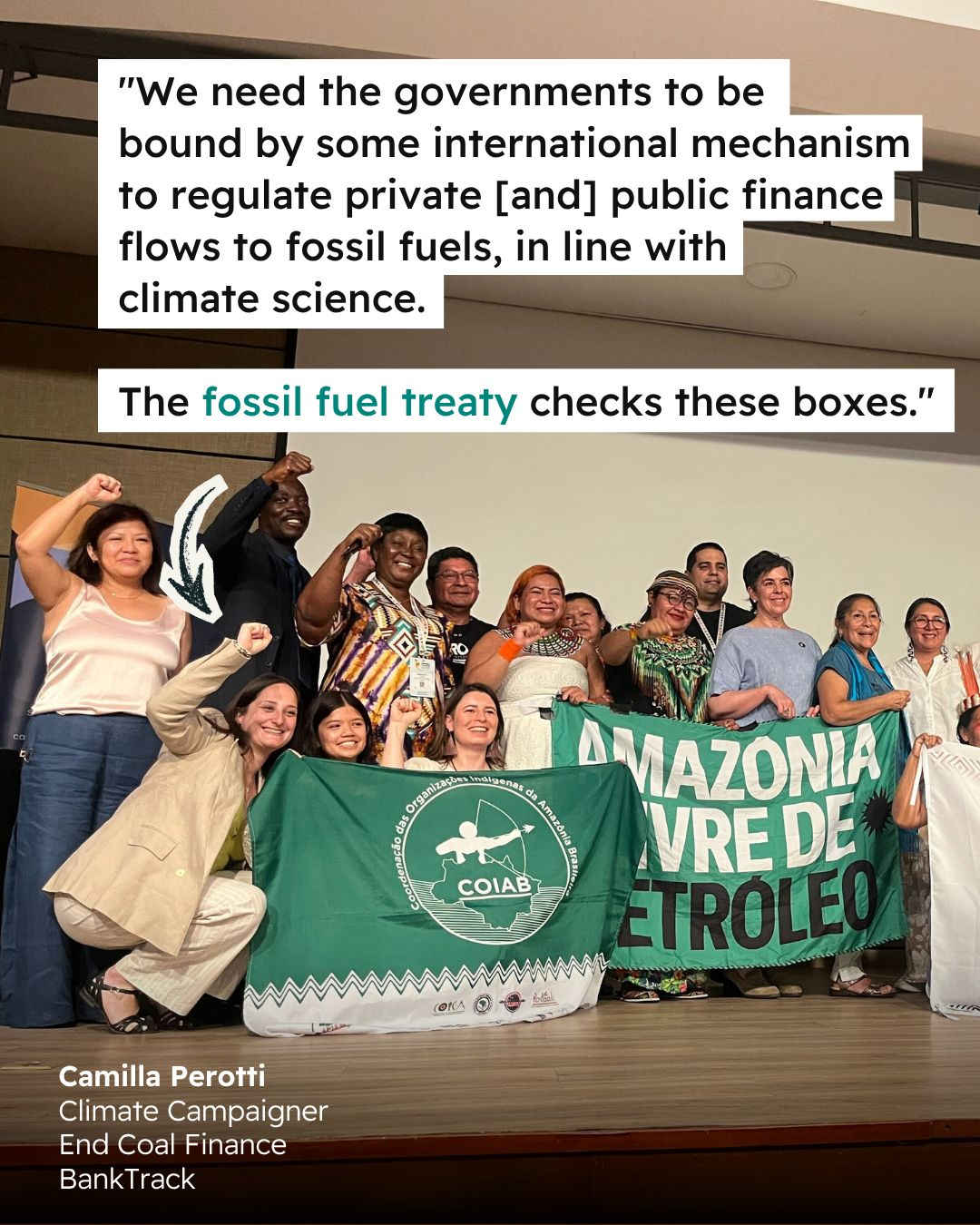
Our brief calls for an international mechanism to align the financial sector with national and regional climate goals, so that governments are bound to regulate private finance flows in line with climate science. In this geopolitical and diplomatic climate, we believe that is the only solution that can have a true and rapid impact in ending fossil fuel finance. Among the various solutions discussed at the Santa Marta Conference, a Fossil Fuel Treaty is what we think would best fit the purpose.
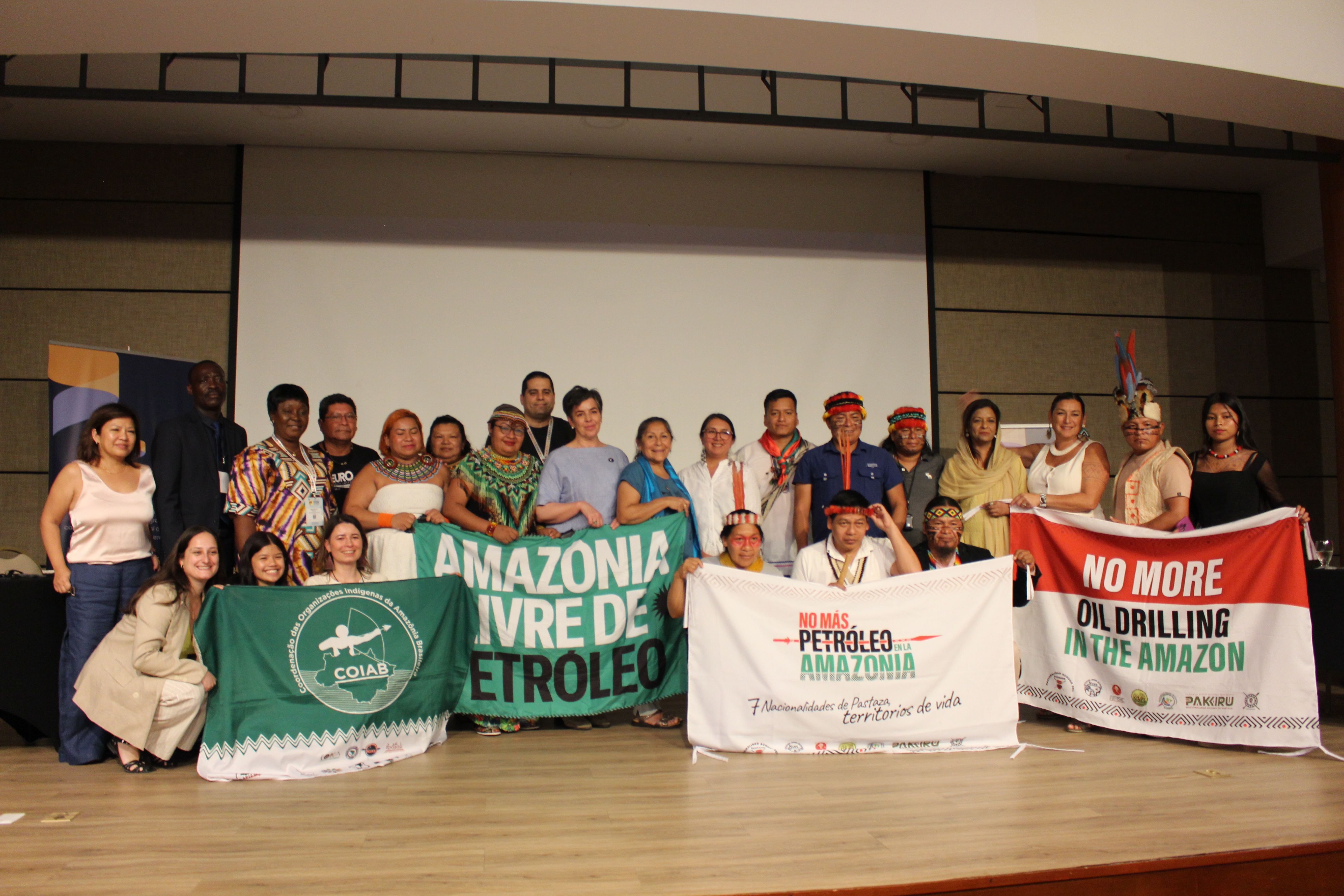
Civil society and Indigenous knowledge confirm role of banks in enabling fossil fuel expansion
The Conference on Transitioning Away from Fossil Fuels felt like a redemption for the more than 1,500 representatives of civil society and Indigenous communities that met in Santa Marta. While Indigenous representatives were removed from COP30 in Belem when protesting their exclusion from the negotiation rooms, the Santa Marta Conference made the participation of civil society and Indigenous Peoples one of its strengths.
Indigenous and civil society knowledge was fed into the high-level summit through a 23-page declaration, drafted at the People’s Summit for a Fossil Free Future. We and several other contributors to the summit emphasised the role of private banks, which was incorporated into Principle 10, Paragraph 5 of the declaration, stating that
“the private sector, including commercial and private banks (...) are massive enablers of current fossil fuel production and usage and fossil fuel expansion” and that “private investments in energy systems must be regulated and directed to move away from fossil fuels towards a just transition, and ensure that they serve the collective well-being of people and the planet.”
The outcome
The discussions in the plenary showed that a more open and constructive conversation on fossil fuel phase-out can be possible also at a diplomatic level, if countries participate with the clear will to take steps forward. The contrast with the proceedings of the most recent UNFCCC conferences of the parties could not have been starker. What comes out of Santa Marta is a general optimism and enthusiasm among the attending delegates, as well as among CSOs and Indigenous communities: The feeling is that a rapid fossil fuel phase-out may now be one step closer to happening, with a clear set of recommendations and clear steps ahead to set concrete roadmaps. We share the sentiment of Colombian Minister for the Environment and Sustainable Development, Irene Vélez Torres, which she expressed at the end of yesterday’s plenary: “This may be the first multilateral meeting that I find not frustrating.”
El corazón del mundo
Gathering in Santa Marta was significant in itself. The Colombian government opted for a location that was more unusual than the capital Bogotá, or the much bigger Cali, which saw the organisation of the Biodiversity COP16 in 2024. Santa Marta is, indeed, what the local indigenous communities call “el corazón del mundo”, the world’s heart. The oldest surviving colonial city in Colombia is still one of the most important coal exchange points in South America. But its true importance resides in its amazing tropical jungle biodiversity environment, nestled between the overlooking Sierra Nevada, the highest coastal mountain range of South America, and the Caribbean Sea.
The Santa Marta Conference will also not be a one-time rarity: The small Pacific island state of Tuvalu, one of the countries that has already been suffering the most evident and severe effects of climate change, will host a second gathering of the willing in April 2027, with the Republic of Ireland as co-host. From one small biodiversity hotspot needing protection to another disappearing paradise in desperate need of rescue.
The Santa Marta Conference was mostly a narrative-setting exercise, and we were successful in putting private banks’ finance for fossil fuels on the map. The need and global support for including banks in a binding international regulatory framework is now clear and will inform the next steps. We will ensure the case for governments to rein in fossil finance is even stronger in Tuvalu, and that more countries are on board. We need an international mechanism supported by as many fossil finance host countries as possible. Santa Marta was the first step towards this.