RAN releases "Equator Principles Fact Sheet" - MUFG and Mizuho suspected of non-compliance with the Equator Principles and their own group environmental and social policies.
Rie Aso, Responsible Finance Campaigner at Rainforest Action Network Japan
Yuki Sekimoto, Team Manager at Rainforest Action Network Japan

Rie Aso, Responsible Finance Campaigner at Rainforest Action Network Japan
Yuki Sekimoto, Team Manager at Rainforest Action Network Japan
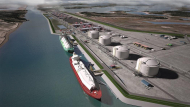
The U.S. environmental NGO Rainforest Action Network (RAN), headquartered in San Francisco, USA, with a Japan office in Shibuya-ku, Tokyo, announced today, May 20th, the Equator Principles Fact Sheet: Suspected Non-Compliance of International Norms such as the Equator Principles and Group Policies by MUFG and Mizuho. (1) The Equator Principles are international standards for evaluating the environmental and social impacts when financing large-scale projects. This document points out that Mitsubishi UFJ Financial Group (MUFG) and Mizuho Financial Group, which have adopted the principles, may not have met many of the requirements of Principle 5, "Stakeholder Engagement," in their financing of the Rio Grande LNG project in Texas. At the same time, it also indicates the possibility of violations of their group's environmental and social policies, which stipulate consideration and careful judgment regarding indigenous communities in financing (2). This investigation and analysis was conducted by RAN based on publicly available information and information provided by local communities, including indigenous peoples, and concluded that the financing is likely non-compliant with the Equator Principles and the group's policies.
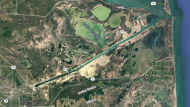
This fact sheet is based on research conducted by RAN, using publicly available information and information provided by local communities, including the Karizo Komekurds, an indigenous group in the Rio Grande Valley region, regarding MUFG and Mizuho's funding for the Rio Grande LNG export terminal project. The Texas LNG facility adjacent to Rio Grande LNG (scheduled to achieve Final Investment Decision (FID) in mid-2026) overlaps with a sacred site of the Karizo Komekurds. The research revealed that Next Decade Corporation, the operator of Rio Grande LNG, has failed to meet many of the requirements set out in Principle 5, "Stakeholder Engagement," of the Principles for engaging with local communities, which are stakeholders. Specifically, these include:
- Failure to provide opportunities for ongoing consultation in an appropriate manner.
- Despite the fact that the results of a proper environmental and social assessment have not yet been disclosed, the site preparation work has been completed.
- MUFG and Mizuho stipulate that they will confirm with the operator that they have obtained “free, prior, and well-informed consent” (FPIC, 4) from Indigenous Peoples, as stipulated by the International Finance Corporation (IFC) Performance Standards referenced by the Equator Principles (3), but the operator is proceeding with construction without obtaining FPIC from the Karizo Komekurd people.
In September 2024, a community delegation from the Rio Grande Valley region and RAN jointly filed a complaint against MUFG and Mizuho through the Business and Human Rights Dialogue and Remedies Agency (JaCER) for failing to conduct proper human rights due diligence in their relationship with Next Decade (5). In October 2024, the community delegation visited Japan and held dialogues with financial institutions such as MUFG (6), but no progress toward a resolution has been seen to date.
This fact sheet also raises concerns that the Rio Grande LNG project, funded by MUFG and Mizuho, along with the adjacent Texas LNG project and the Rio Bravo pipeline project, will result in enormous greenhouse gas (GHG) emissions over their entire lifecycle once completed.
Overview of MUFG and Mizuho's involvement
Despite formal complaints and concerns raised by the local community and RAN, MUFG and Mizuho played a significant role in the Rio Grande LNG project, both in Phase 1 and Phase 2 (FID). In addition, both banking groups continue to be involved in the project through providing funding and advisory services to Next Decade.
Rio Grande LNG, Phase 1, Units 1-3, 2023 (Source)
- MUFG: US$1.64292 billion
- Mizuho: US$1,222,920,000
Rio Grande LNG, Phase 2 preparations underway, 2024 (Source)
- MUFG: US$190 million
Rio Grande LNG, Phase 2: Unit 4, FID (Financial Inspection) to be completed in September 2025 (Source)
- MUFG
- Intercreditor agent for a $3.85 billion term loan.
- Mizuho
- Collateral agent for Unit 4
- Capital raising advisor for Next Decade
Rie Aso, RAN's Responsible Finance Campaigner (Japan), stated, "The announcement of MUFG and Mizuho's decision to fund the Rio Grande LNG expansion project, following heartfelt dialogue with local indigenous peoples and community delegations, clearly demonstrates that the social and environmental commitments of both banking groups are meaningless. RAN has long raised concerns about megabanks and corporate groups that have significant social and environmental impacts. However, the continued funding of such fossil fuel companies by megabanks raises serious questions about the meaning of their social and environmental commitments. These repeated fundings by banks enable these companies to continue their problematic business activities, and it is the local communities living there who will ultimately pay the price."
RAN urges MUFG and Mizuho to promptly implement countermeasures including the following three points:
- Verify the facts regarding the negative impacts, including violations of indigenous rights, in the Rio Grande LNG, Texas LNG, and Rio Bravo pipeline projects, and the responses of customer companies.
- Promptly begin consultations with community representatives regarding the redress and correction of the negative impacts of the above-mentioned projects and work with client companies to resolve the complaints submitted to JaCER.
- In light of the severity of the non-compliance with policies by customers of the above-mentioned businesses, cease providing future support to these businesses and customers.
Notes for editors:
Note 1) "Equator Principle Fact Sheet: Suspected Non-Compliance of International Norms such as the Equator Principle and Group Policies by MUFG and Mizuho - Funding for Rio Grande LNG in the United States" - Japanese version; English version.
Note 2) "MUFG Environmental and Social Policy Framework"; Mizuho Financial Group "Summary of Policy on Environmentally and Socially Responsible Transactions".
Note 3) MUFG and Mizuho have defined special circumstances under Section 7 of the IFC Environmental and Social Sustainability Performance Standards (IFC Performance Standards), including projects that affect lands or natural resources traditionally owned or customarily used by indigenous peoples, and projects that have a significant impact on important cultural heritage essential to indigenous identity.
Note 4) "FPIC" is an abbreviation for Free, Prior and Informed Consent. It refers to the right of indigenous peoples and local communities to freely consent to or reject development that affects customary land owned and used by them, after receiving sufficient prior information.
Note 5) Website of the Japan Center for Engagement and Remedy (JaCER). MUFG and Mizuho are member companies of this organization; Submitted complaint.
JaCER "Complaint Handling Case List" (Updated May 1, 2026):
- Case Registration Numbers: No.036_2024 and No.035_2024 (Received September 26, 2024)
- Status: The member company (bank) states that it is "continuing dialogue with the complainant," but the local community has never been provided with an opportunity that could be called "dialogue."
Note 6) RAN press release, "Representatives from the U.S. Gulf Coast make first visit to Japan, urging Japanese banks to support risky LNG projects," October 18, 2024.
This press release was originally published in Japanese on RAN Japan website at this link.